

It is its charm and atmosphere that clearly set Lanzarote apart from the other Canary Islands. And this is not simply because Lanzarote consists largely of black sand and dark volcanic rock. The island exudes a cheerful serenity, a tranquillity that is difficult to describe but has an immediate effect.
Anyone who takes a closer look at Lanzarote will inevitably come across the name César Manrique Cabrera. Manrique was an artist, painter, architect and visionary. His works can be found not only on Lanzarote, but also on other islands, such as the well-known Lago Martiánez seawater swimming pool in Puerto de la Cruz.
Yet Manrique’s home was Lanzarote. It was there that he created some of his most significant works: the cactus garden, the entrance to an underground lake, living spaces within lava bubbles, wind chimes and much more.
Lanzarote – shaped by César Manrique
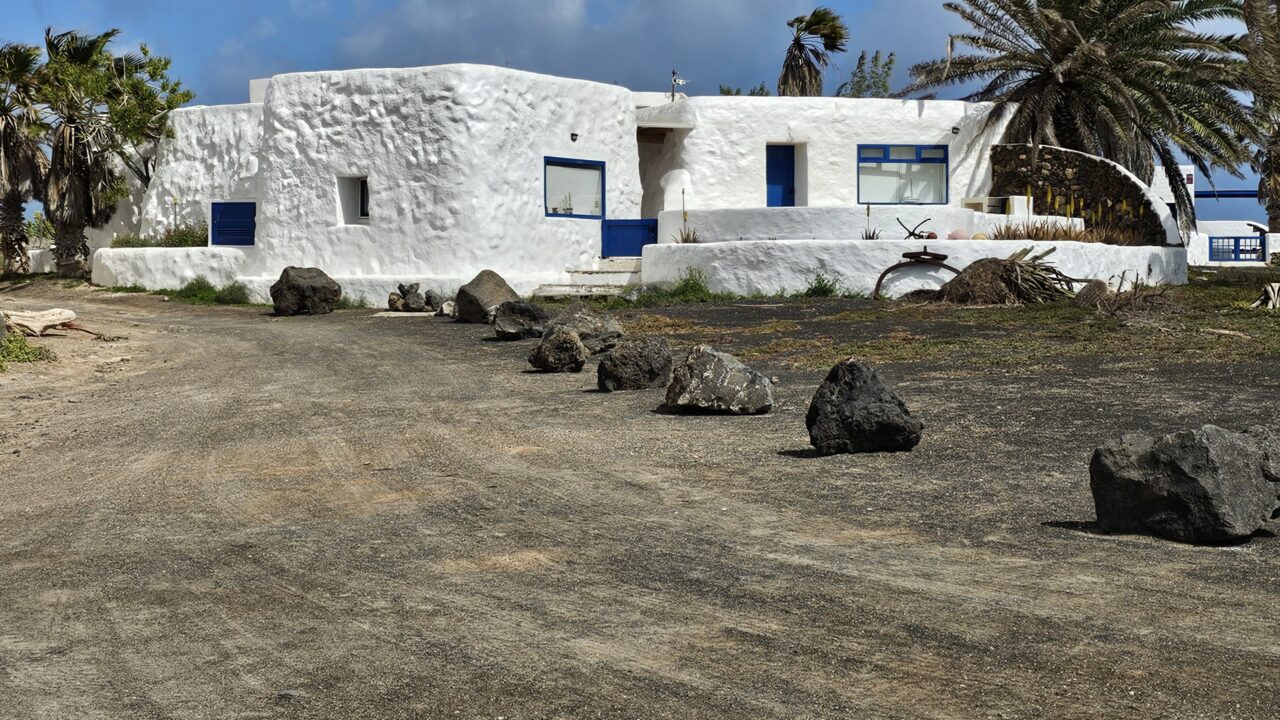
His vision was to turn Lanzarote into an island of sustainable tourism. The artist succeeded in this. Manrique insisted that buildings be limited to a maximum of two storeys and be painted white. Windows and doors were to be blue near the coast and green inland.
With a few exceptions, the developers adhered to these guidelines. Today, one might say that Manrique developed a unique and consistent ‚corporate design‘ for his home island.
Manrique was convinced that Lanzarote could only preserve its identity if the island followed a clear aesthetic approach. He spoke of ‚aesthetic discipline‘ – a conscious approach to architecture, colours and materials. Buildings should remain low-rise, be painted white and blend harmoniously into the landscape.
He was strictly opposed to advertising hoardings, garish façades and visual disturbances. This stance was not only artistically motivated, but also a matter of social concern. Manrique viewed Lanzarote as a total work of art that needed to be protected. His conviction prevailed and continues to shape the island’s appearance to this day.
Lanzarote and the vision of sustainable tourism
Although Manrique did not invent traditional agriculture in La Geria, he recognised its cultural and aesthetic value at an early stage. The semi-circular stone walls, the hollows in the black lapilli and the hardy vines form a landscape that appears like a work of art.
For Manrique, La Geria was an example of how humankind and nature can work together without destroying one another. For him, this form of agriculture became a symbol of Lanzarote’s identity and proof that sustainable use and aesthetic harmony are compatible.
In 1993, Lanzarote was designated a biosphere reserve by UNESCO, the first entire island in the world to receive this status. This designation recognises not only the island’s extraordinary volcanic landscape, but above all the interplay between nature, architecture and sustainable development. It was precisely this interplay that lay at the heart of Manrique’s life’s work.
He campaigned against uncontrolled mass tourism, against high-rise buildings and against the destruction of the countryside. To this day, the UNESCO honour is regarded as international recognition that César Manrique’s vision of sustainable, responsible tourism has come to fruition.




No comments on this article yet.