

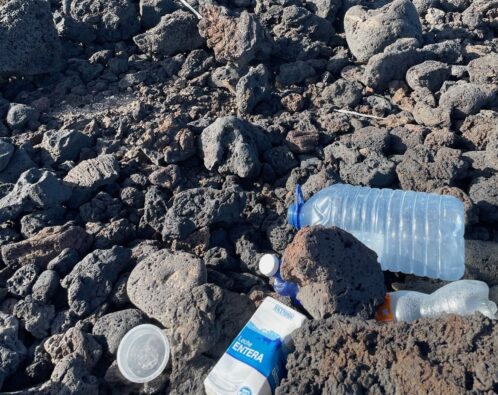
The litter map shows all verified reports from our readers in Granadilla de Abona on Tenerife: where litter has been found, what has been found there, and how the number of reports is changing. You can see where Granadilla de Abona ranks compared with neighbouring towns.
- Rubbish capital of the Canary IslandsGranadilla de Abona
- Most rubbish on TenerifeGranadilla de Abona
- Rubbish index 4.3Rank 1 of 1 on Tenerife, Rank 1 of 1 in the Canary Islands
- 5spots on the map
- 5reports in 12 months
- 0of which cleared
- 5reports since launch
What is dumped in Granadilla de Abona
| Type | Reports | Share |
|---|---|---|
| Building rubble | 2 | 40 % |
| Other | 2 | 40 % |
| Bulky waste, appliances | 1 | 20 % |
Reports over the last twelve months
Compared with the neighbouring municipalities
| Rank | Municipality | Rubbish index | Reports | active | cleared | Last month |
|---|---|---|---|---|---|---|
| 1 | Granadilla de Abona | 4.3 | 5 | 5 | 0 % | |
| Arico (not enough reports yet) | 2 | 2 | ||||
| La Orotava (not enough reports yet) | 0 | 0 | ||||
| San Miguel de Abona (not enough reports yet) | 0 | 0 | ||||
| Vilaflor de Chasna (not enough reports yet) | 0 | 0 |
Rank and last month refer to the island ranking.
The ranking counts reports from our readers, checked by photo. It is not an official survey. Rubbish index: weighted reports over the last twelve months per 10,000 inhabitants (small 1, medium 3, large 8). A municipality is ranked from five reports, an island from 20. Cleared spots still count, because the rubbish was there.
Municipal boundaries: Gobierno de Canarias (GRAFCAN, CC BY 3.0, 2021). Population: INE, 1 January 2025. Updated: 13 November 2026, 11:04
More on the rubbish map
How the litter map works
Anyone reporting litter taps on the map, uploads a photo and confirms the report via email. An image verification process filters out photos without litter and blurs out people and number plates. The email address does not appear anywhere.
Once the litter has been cleared, any reader can report this by uploading a new photo from the same location. The marker then turns green and remains visible for 90 days. Markers that have not been confirmed by anyone for six months disappear from the map.