Inside Cueva del Viento, Europe’s longest lava tube
Formed in a single day when Pico Viejo erupted 27,000 years ago, the tunnels near Icod de los Vinos run for 17 mapped kilometres. Guided groups of up to 16 people reach about 190 metres inside, four times a day.
Johannes Bornewasser is an author, journalist and editor-in-chief of Teneriffa News. He is regarded as a recognised expert on the Canary Islands. Bornewasser is also responsible for the editorial content of the website.
5 min read
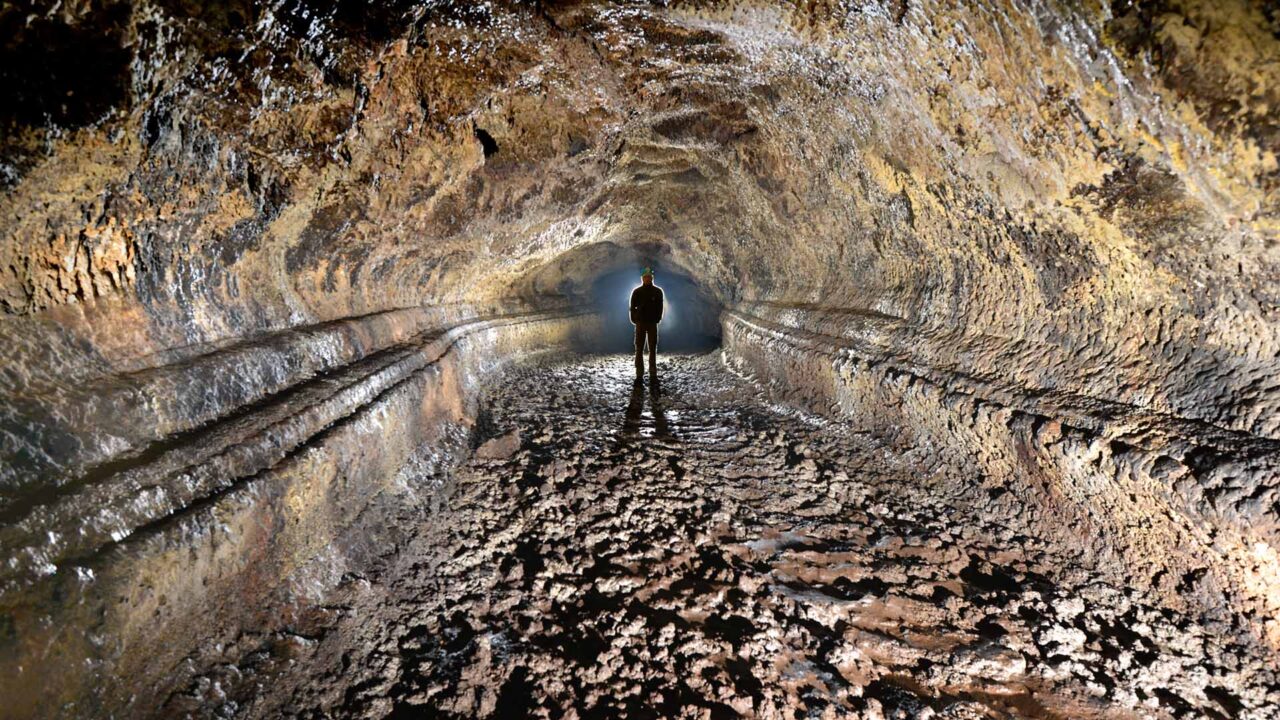
Photo: Inselverwaltung TeneriffaAround 190 metres of the system, which stretches for many kilometres, are open to the public.
The inhabitants of the small island town had long been aware of the cave’s existence. According to legend, a goat herder fell 16 metres into a sudden chasm in the ground whilst crossing a particularly thin section of the previously unknown cave ceiling with her flock. The herder was lucky: she landed on her goats and survived the fall. Other herders witnessed the drama and eventually rescued the unwitting discoverer unharmed.
Since then, all manner of legends have circulated on the island. However, geological surveys did not take place until the late 1960s. Since June 2008, a very small section of Europe’s longest lava tube has finally been open to visitors, offering them a breathtaking, naturally formed setting.
With 17 kilometres explored to date, the cave system is recognised as the fifth-largest lava cave in the world. It is surpassed only by the cave systems in Hawaii. Kazumura Cave, located on Kilauea, is the world’s longest lava tube at 61.4 kilometres and the deepest at 1.1 kilometres.
Cueva del Viento: Unknown animal species
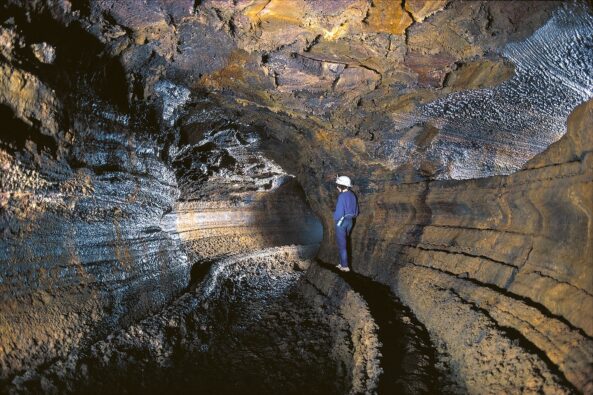
Visitors can venture around 190 metres into the cave. Whilst this may not sound like much, it is in fact more than enough to get a sense of the 27,000-year-old tunnel system. At that time, Pico Viejo – a subsidiary volcano of Mount Teide, some 500 metres smaller – erupted on its south-western flank. The resulting lava flows formed the basalt cavities that have survived to this day within the space of a single day. The impressive underground landscape, with its galleries, extends across three different elevation levels.
The ecosystem within it is extremely fragile. With constant temperatures of between ten and twelve degrees Celsius and complete darkness, just four guided tours a day with a limited number of visitors are enough to alter the habitat to such an extent that the flora and fauna would become extinct. For this reason, the government has only opened up a small section. The remaining areas of the Cueva del Viento still provide a habitat for around 120 species today. These even include four species that were unknown until recently, which scientists believe to be unique in the world – that is, found only on Tenerife.
Whilst visitors explore the accessible and secured section of the «Cueva del Viento», scientists are venturing ever deeper into the cave system. And the 17 kilometres explored so far are by no means the end of it. However, the explorations are arduous and, in some cases, only possible through expeditions lasting several days, involving a base camp and overnight stays; this is why it will take many more years before further sections are discovered and mapped.
Giant lizards at lava level on Tenerife
During their explorations, the scientists even found evidence of extinct giant lizards and rats in the caves. However, these did not live in the caves themselves but, like the goat herder, had probably entered the cave system involuntarily and been unable to find their way out.
Thanks to the climatic conditions, the animals‘ remains were so well preserved that these extinct species could be studied and are now recognised as native to the area. The actual inhabitants have little in common with animals living on the earth’s surface. Most of them have atrophied or no optic or auditory nerves at all, but in return possess an excellent sense of touch. Furthermore, foraging is so arduous and dangerous that they can survive for up to three months without eating.
Incidentally, the name ‚Cueva del Viento‘ was chosen for purely practical reasons. A sort of chimney effect occurs inside the cave system. The seven entrances discovered so far allow the wind to whistle through the passages in such a way that the locals coined the name ‚Cave of the Wind‘.
Lava cave on Tenerife: four tours a day
Due to the sensitive ecosystem, a maximum of four two-hour guided tours are held each day, with a maximum of 16 people per tour. Long trousers and sturdy footwear are compulsory for the tours, which are classified as moderate in difficulty. People with claustrophobia and children under the age of five should not take part in the tour.
The guided tours begin at the Cueva del Viento information centre with a video and a brief introduction. Visitors are then taken by minibus to a car park, from where it is a roughly twenty-minute walk uphill to the cave entrance. Qualified guides provide information to visitors to Europe’s longest lava cave in Spanish, German, French and English. Visitors will also find bilingual information boards.
Admission and opening hours for Europe’s longest lava cave
Opening times and guided tours: In summer, guided tours take place on Mondays, Wednesdays, Thursdays and Fridays from 9 am to 7 pm, and on Tuesdays, Saturdays and Sundays from 9 am to 4.30 pm. In winter (October to March), guided tours are offered every day until 5 pm, and on Thursdays even until 6 pm. Tuesday to Saturday from 9 am to 4 pm. Booking: Essential due to the limited number of participants:
Tel.: 0034 – 922 81 53 39 or via cuevadelviento.net Admission: Locals and residents with ID: 10 euros, adults: 16 euros, children: 5 euros


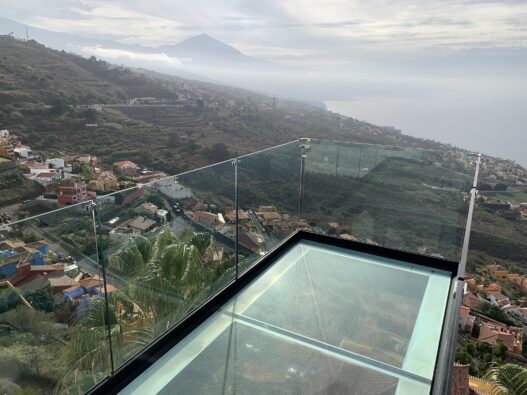
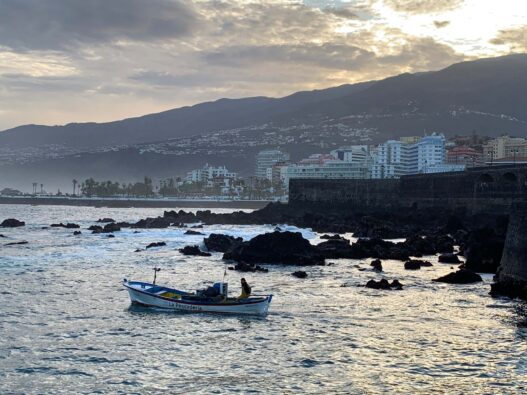
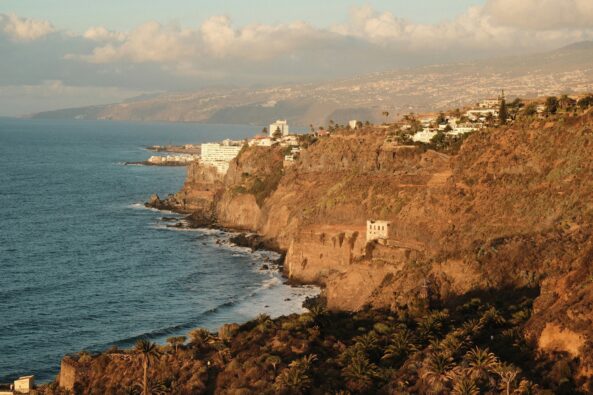
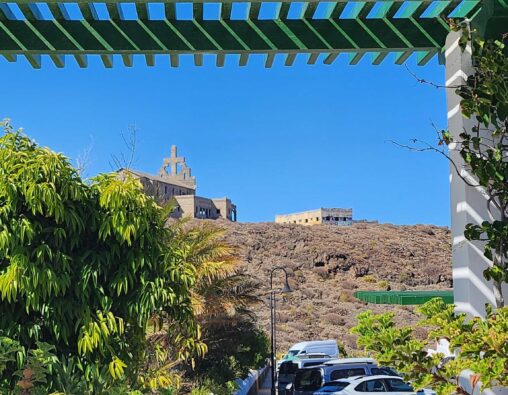
«Cueva del Viento: Europe's longest lava cave on Tenerife»
No comments on this article yet.