

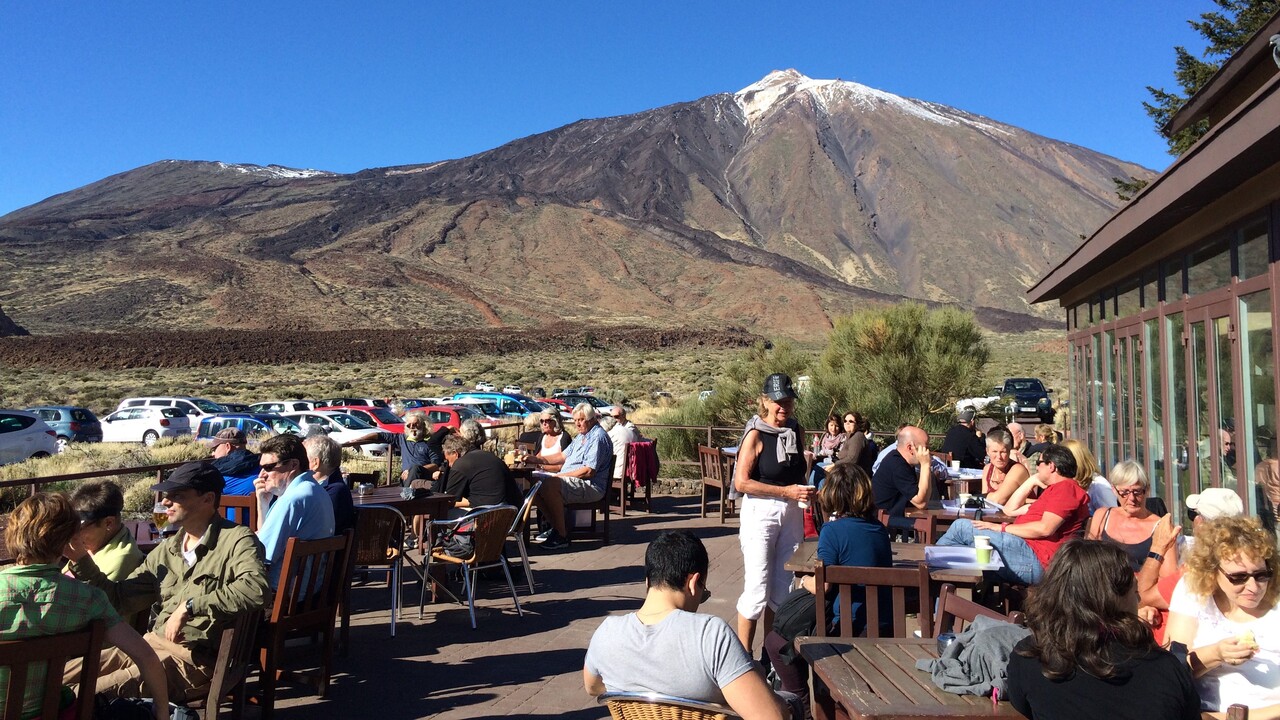
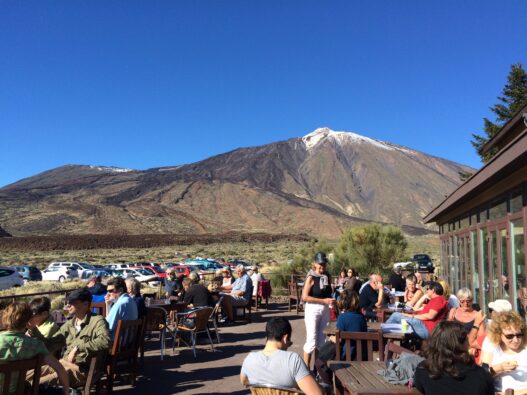
Tenerife’s Island Council is taking decisive action. Mount Teide National Park is now under the full administration of the Cabildo. This paves the way for the implementation of long-planned access restrictions.
A comprehensive reform is intended to reduce the pressure on the nature reserve. In future, only half as many people as before will be allowed to visit Mount Teide National Park.
Added to this is a new transport scheme that severely restricts private cars belonging to non-residents and relies instead on shuttle buses. And there are further restrictions in place.
Tenerife significantly restricts access to Mount Teide
To limit the growing impact of the large influx of visitors, the Island Council has adopted the proposed action plan. The scheme is modelled on international best practice for heavily visited nature parks, where access restrictions, advance bookings and access controls are standard practice.
Rosa Dávila, President of the Island Council of Tenerife, stated that the aim was to significantly reduce overuse. «This will only be possible if visitors play their part too,» said the politician.
As a first step, the use of private vehicles by non-residents will be restricted in future. To this end, a network of 28 shuttle buses will be launched, which, from 2027, will run every 20 minutes from Puerto de la Cruz, La Laguna, Costa Adeje and Puerto Santiago every 20 minutes from 2027 onwards and will be able to carry up to one million passengers annually. Within the park, a circular bus service will also run every 15 minutes, stopping at several points between the visitor centre and the Roques de García. The shuttle buses are free for residents of Tenerife.
Tenerife: New access rules and eco-tax for Mount Teide
Anyone who nevertheless travels by hire car will, in future, have to book one of the 500 available parking spaces in advance and pay a fee. Incorrectly parked vehicles will be towed away immediately. An eco-tax is also planned. This will officially apply to access, parking and certain activities.
The exact tariff is still being reviewed. Residents of Tenerife will retain priority access free of charge. An access control system is due to come into operation as early as summer 2026 at the main entrances at La Esperanza, La Orotava and Vilaflor-Chío.
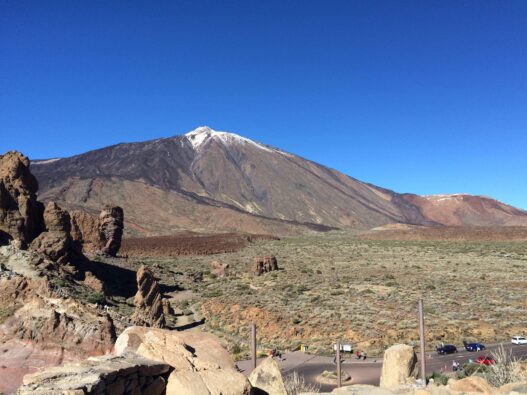
Further measures concern popular viewing points such as Chipeque, Roques de García and Minas de San José. Advance booking will be compulsory at these locations in future. The aim is to ease the pressure during peak times and spread visitor numbers throughout the day.
More environmental wardens and a multi-million programme by 2028
In addition, the conservation team at Mount Teide is to be significantly strengthened. In future, 74 specialist staff will be on duty. Until now, only two people had been permanently assigned to the protection of Mount Teide. This is complemented by a 24-hour video surveillance system, which has already been launched.
By 2028, the Island Council of Tenerife will have invested just under 1.7 million euros. This injection of funds is intended to enable the implementation of 23 environmental projects. These include the restoration of rare species, long-term ecological monitoring, the control of invasive plants, and the use of drones and genetic analysis. Educational programmes and guided tours will also be significantly expanded.

«Eco-tax and fewer visitors: Tenerife makes drastic changes to access to Mount Teide»
No comments on this article yet.