

According to a report by Oxfam Intermón, mortgage or rent payments force 26,332 workers in the Canary Islands into poverty every month, despite having a stable income from their jobs.
On Monday, this NGO published the report ‚When working is not enough: the impact of housing costs on in-work poverty‘, which describes how, in Spain, having a job no longer guarantees that one will not be poor, because housing costs are taking up an increasingly large proportion of people’s incomes.
Oxfam Intermón estimates that, in Spain, before deducting mortgage or rent payments, 11.48 per cent of workers live in poverty, around 2.2 million people.
Canary Islands: Housing costs are pushing workers below the poverty line
Once the cost of housing is factored into the calculation, a further 770,000 people in work fall below the poverty line, bringing the total figure to nearly 3 million. The rate thus rises to 15.49 per cent, an increase of more than four percentage points.
In the Canary Islands, housing costs mean that the proportion of working poor rises from 11.75 per cent (before paying the mortgage or rent) to 14.71 per cent (after). Specifically, it increases by almost 3 percentage points.
In absolute terms, these percentages mean the following: 104,527 people are living below the poverty line despite having a job, even before taking into account the cost of their housing.
If their situation is assessed after taking into account their mortgage payments or rent, the total number of working poor on the islands stands at 130,859 people.
The report reveals that rent and mortgage payments have different impacts. The proportion of workers in the Canary Islands with a mortgaged home who fall into poverty after paying their monthly mortgage instalment is 8.80 per cent, 2.66 percentage points higher than before paying it (6.14 per cent).
Rents in the Canary Islands push the poverty rate up to 27.70 per cent
By contrast, renting at market rates increases the poverty rate amongst workers in the Canary Islands by 11.49 percentage points, rising from 16.21 per cent before the monthly rent is paid to 27.70 per cent afterwards.
In other words, in the Canary Islands, one in four workers who live in rented accommodation live in poverty.
Oxfam warns of 'invisible' poverty caused by housing costs
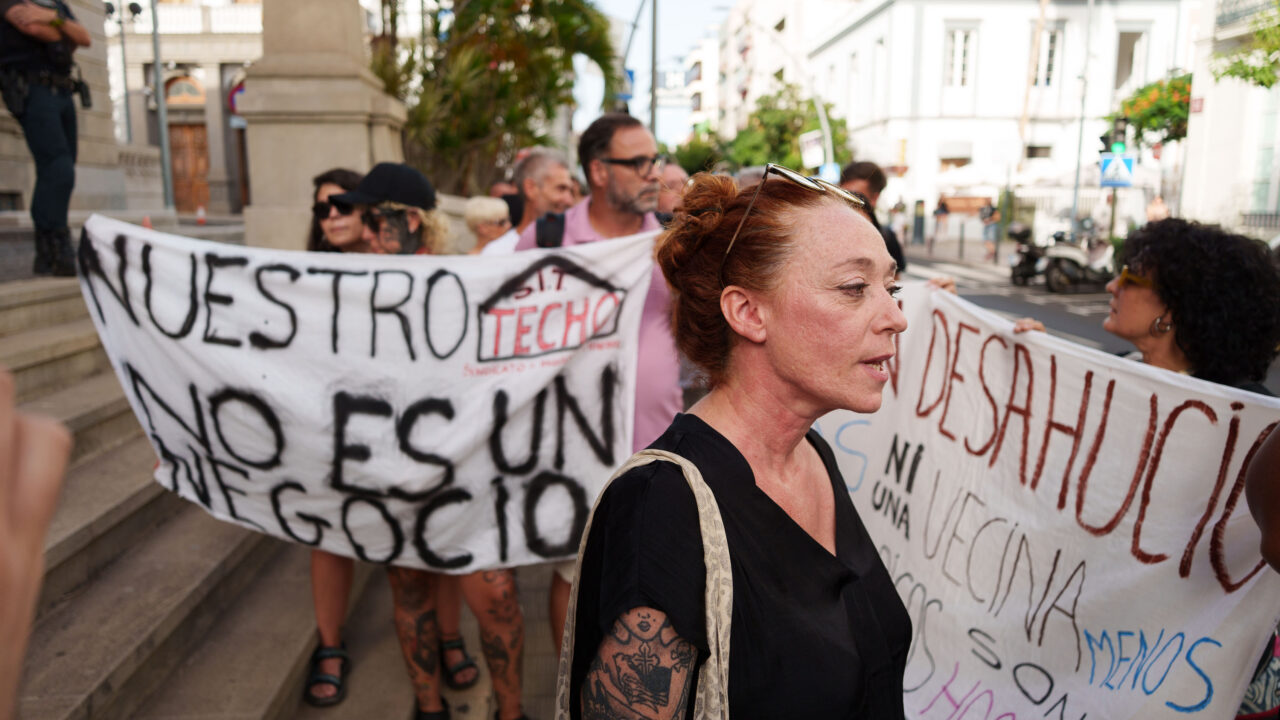
Oxfam Intermón emphasises that these figures have come to light at a time when housing is at the heart of the social and political debate in Spain, with public protests which, in its view, «have once again brought to the fore the human consequences of a housing crisis that goes far beyond simply losing one’s home: it also undermines the ability of hundreds of thousands of households to maintain decent living conditions».
«Evictions are the most extreme manifestation of the housing crisis, but not the only one. There is another, less visible reality: people who work and manage, with great difficulty, to pay for their home each month, but who, after doing so, do not have enough income to maintain a decent standard of living. Housing is becoming one of the main factors driving poverty and inequality,» says Alejandro García-Gil, the NGO’s head of housing, employment and social policy.








Comments (0)
No comments on this article yet.