

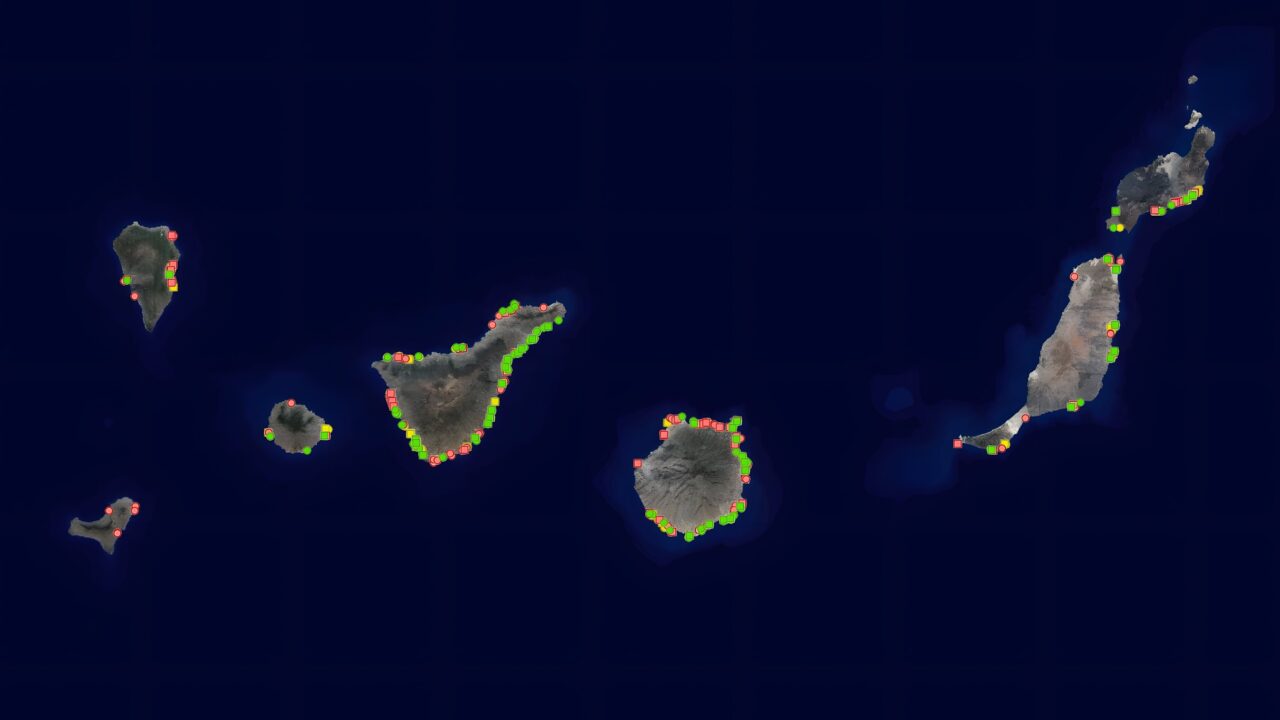
The beaches of the Canary Islands are tested for water quality roughly every three weeks. This is necessary due to the numerous, sometimes unauthorised, sewage outfalls off the coast. If the readings exceed the limits, the beaches must be closed until the next sample shows that the levels have fallen. But what happens between two samples being taken?
Playa Jardín in Puerto de la Cruz has provided a very vivid illustration of the scale of sewage discharges off the Canary Islands‘ coastline: the region’s most popular beach had to be closed for 350 days. Since then, there has been a major debate about water quality. Local residents and holidaymakers are calling for greater transparency.
Teneriffa News has been regularly monitoring water quality parameters since the start of this week, providing a clear overview of where limit values are currently being exceeded. We also monitor the weather and currents to calculate where bacterial contamination might be prevalent. We present both sets of data in a clear and organised manner.
Where is water quality good in the Canary Islands today, and where is it poor?
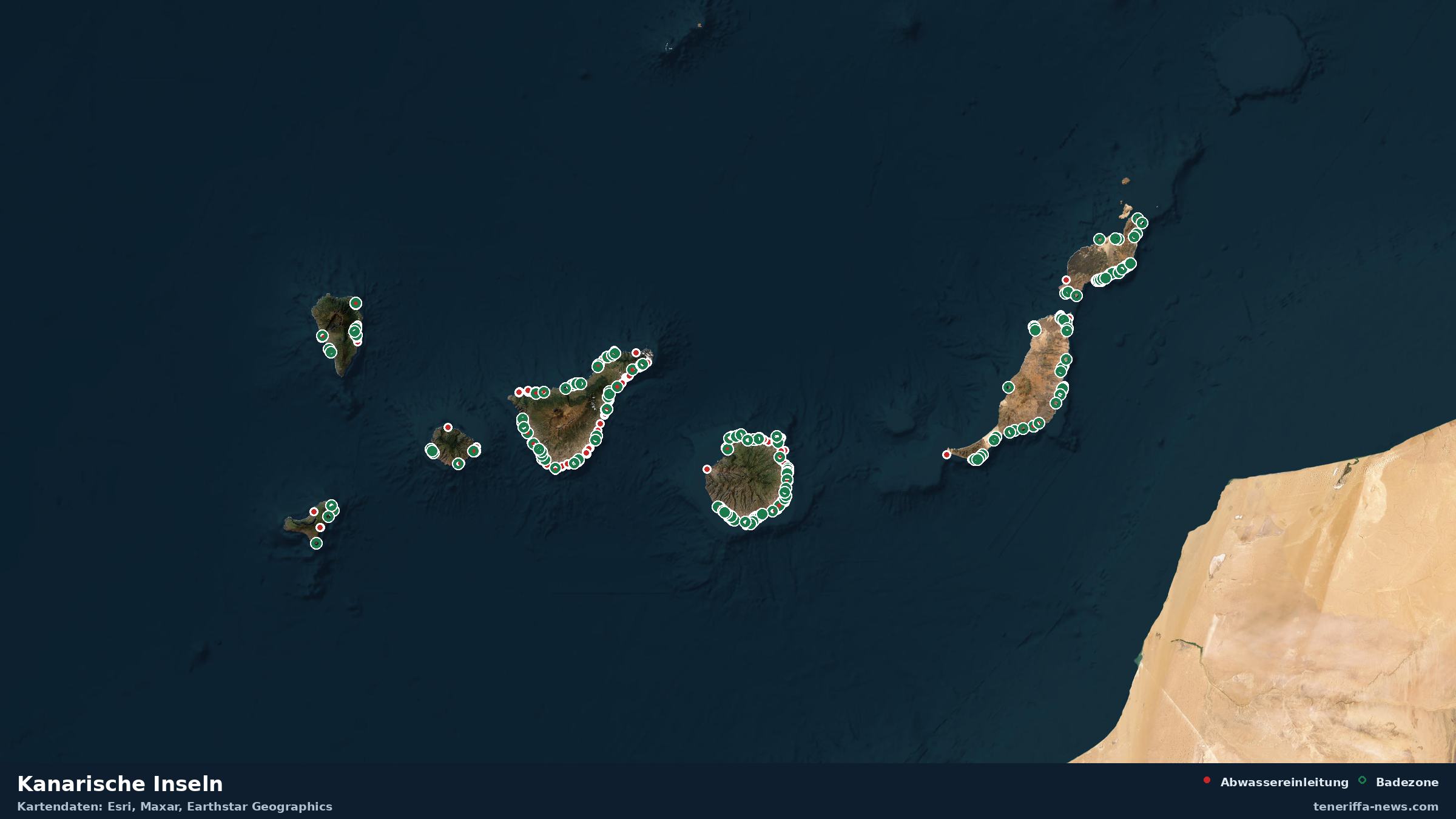
We monitor the water quality figures for 178 bathing areas in the Canary Islands. We also regularly review the current 403 sewage discharge points. As things stand, 291 of these do not have full authorisation. 46 of them are located less than 250 metres from the coast.
In addition, there are 10,845 laboratory samples. Most of these show no abnormalities. However, whenever a sample reveals poor water quality, the question arises: how long has the water quality been compromised?
The example of Playa Jardín shows that several years elapsed between a pipe burst near the beach and the closure of the beach. Furthermore, the pipe burst has still not been repaired, even more than a year after the beach reopened. It therefore makes sense to pinpoint exactly where unauthorised entry points are located in the Canary Islands and to take the current data into account.
Our newly created section on water quality at Canary Islands beaches highlights exactly that. And you can use the search functions to view the data for your beach. If your favourite beach isn’t listed, that’s a good sign. It means there haven’t been any official closures for health reasons in the recent past. You can find the latest figures for your beach via the link below, which is always kept up to date so you can check again before your next visit:







«Canary Islands authorities report good water quality at popular beaches»
No comments on this article yet.