

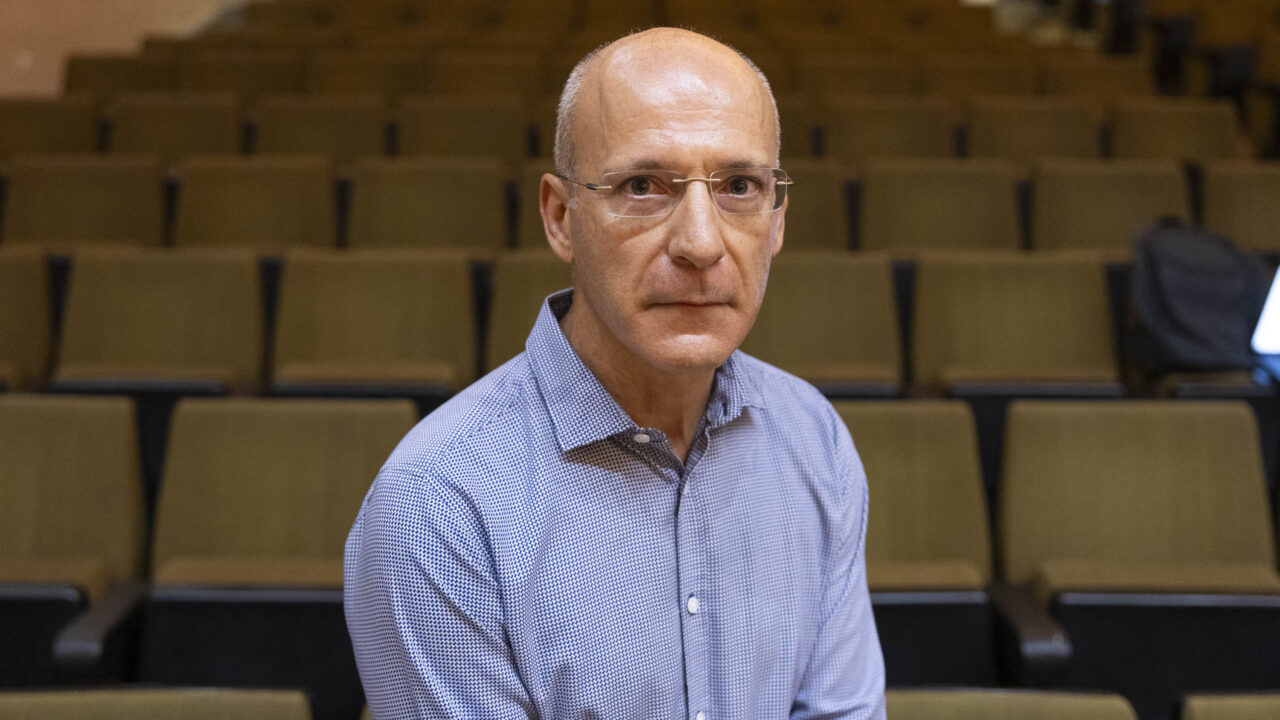
An act of generosity by Francisco Falcón, a living kidney donor from Gran Canaria, has set off a chain reaction that has benefited three patients with whom he has no connection whatsoever, neither as friends nor as relatives.
Her selfless act has been the key to a virtuous circle that enabled three kidney transplant operations to take place almost simultaneously in different parts of Spain, involving hundreds of professionals, explained Carolina García, co-head of the transplant unit at the Canary Islands University Hospital (HUC).
Living organ donations usually take place between family members or partners, but sometimes incompatibilities arise, leaving these patients with two options: to wait for an organ from a deceased donor, or for a compatible living donor who does not know the identity of the recipient.
Living kidney donation: organ chain completed within 24 hours
This is quite exceptional when you consider that Francisco’s case is only the second successful instance of a chain reaction of this kind in the Canary Islands. The other occurred in 2013.
His organ went to a patient whose relative was an unsuitable donor; that patient’s organ went to another patient in the same circumstances; and that patient’s organ, in turn, was sent to the Canary Islands for a patient who had been on the waiting list for two years.
Ana González, head of the living donor kidney programme at the HUC, has emphasised that, thanks to Francisco, «three people were taken off dialysis» on the very day he donated his kidney.
He explained that the entire process took place within 24 hours, including the organ removals from the donors at three Spanish hospitals, one of which was the HUC, where Francisco underwent laparoscopic surgery, as well as the air transport of the organs and the transplants to their recipients.
All of this took place under «exquisite organisation, to ensure that nothing went wrong», emphasised González, who revealed that the first thing Francisco asked after leaving the operating theatre was how the person who had received his kidney was doing.
He emphasised that this operation was preceded by a study lasting several months, as there are «many» people who «come forward out of love and want to help a loved one, but there are strict medical and surgical requirements that must be met», which «provides certain guarantees» that the donor will not suffer any long-term effects. «We take very few risks.»
After some initial hesitation, Francisco Falcón decided
The protagonist of this story, Francisco Falcón, has explained that he is a regular blood donor but that, after hearing the story of someone else who had donated an organ whilst still alive, he began to consider this possibility.
From then on, he was inspired, and thanks to ‚the values of service and care for the sick‘ that he had learnt from his parents, and the ‚Good Samaritan ethos‘ of his Catholic faith, he took the plunge.
He has admitted that at one point he had doubts, particularly about whether donating one of his kidneys would affect his day-to-day life, and once he was assured that it wouldn’t, provided he maintained a healthy lifestyle and diet, «the decision was clear to me».
«The benefits to the transplant recipient outweighed the risks involved,» he stated, adding that he was «very pleased» that, in the end, three patients had benefited rather than just one.
Francisco, whose recovery following the donation was «very quick», does not want to be seen as a hero or anything of the sort, as in the Canary Islands and the rest of Spain there are «many donations between partners, from parents to children… it is an act of love that happens all the time».
He has therefore encouraged others to take the plunge because «it is an act of generosity that does a great deal of good and places no restrictions on the donor».
Living kidney donations improve survival rates and quality of life
This is the same message put forward by Domingo Hernández, head of the nephrology department at the HUC, who has emphasised ‚the benefits‘ of living donor kidney transplants, as they improve graft survival and the patient’s quality of life, whilst reducing complications compared with transplants from deceased donors.
He pointed out that Spain is a world leader in this field, but the proportion of living donors stands at 10 per cent, compared with other countries such as the United States or the Nordic countries, where they account for between 30 per cent and 40 per cent.
As of 30 September, 387 cross-donor transplants had been carried out in Spain and as part of the exchange programme with Portugal and Italy, along with 28 altruistic donations, thanks to which 92 transplants were performed.
Cross-transplantation brings incompatible donor pairs together
Cross-transplantation is an option for people who need a kidney transplant and have a living donor who wants to help them but is not a match.
Rather than turning down the donation, other couples in the same situation are sought out so that the donors can be swapped. In this way, each patient can receive a compatible kidney.
In 2018, the National Transplant Organisation (ONT) launched a nationwide programme to promote living kidney donation, in collaboration with the autonomous communities.
The Spanish protocol for cross-transplantation of kidneys has been drawn up by a committee of experts comprising representatives from the National Transplant Organisation (ONT), regional and hospital transplant coordinators, nephrologists, urologists, immunologists, judges and experts in bioethics.


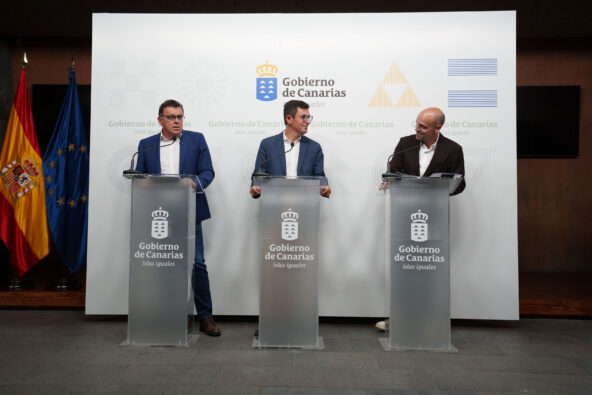
«Francisco from Gran Canaria makes three kidney transplants possible»
No comments on this article yet.