

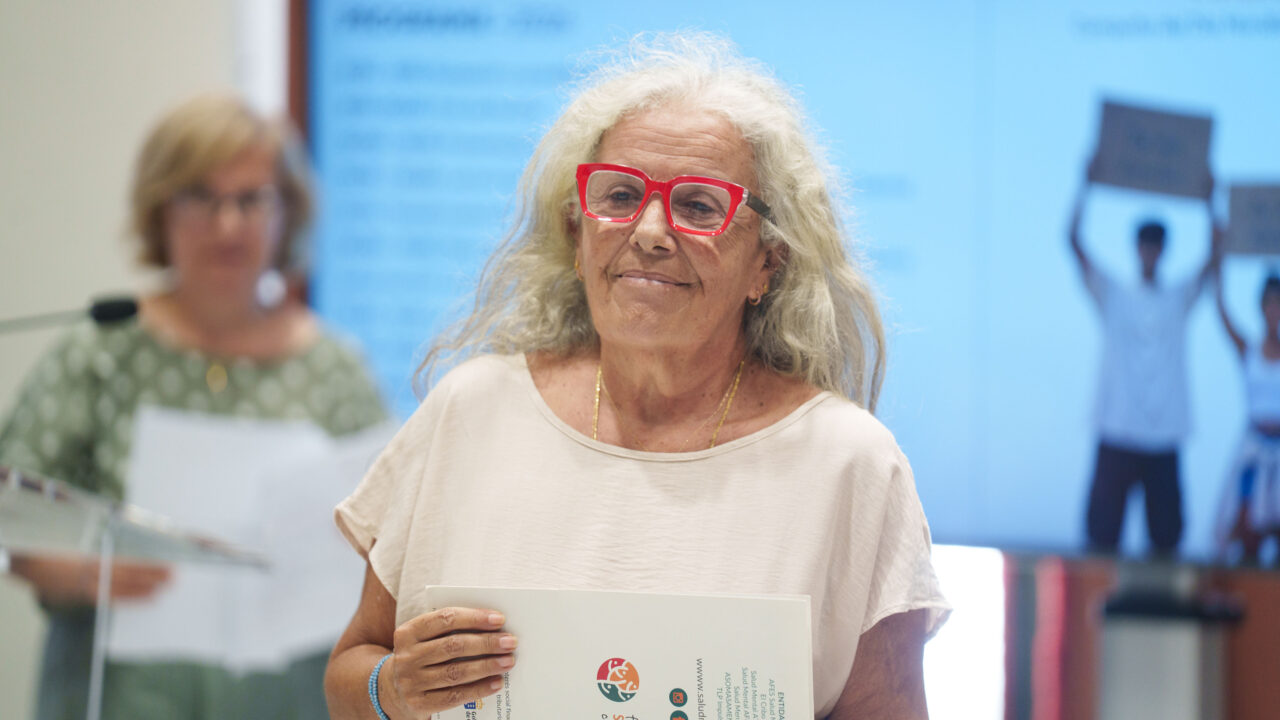
Young people are calling for resources and community support so that «when things get tough, they have someone to turn to» and so that mental health is not just about prevention, but also about education, decent housing and work, so as «not to put our future on hold», said Esperanza Vela of UNICEF in the Canary Islands.
On Friday, Esperanza Vela read out the manifesto «Match your mental health» in the Canary Islands Parliament to mark World Mental Health Day, which in 2026 focuses on the emotional wellbeing of young people and on which the regional federation in this field has called for stable funding, sufficient resources and equitable care across all the islands.
The UNICEF Canary Islands representative has emphasised that no one deserves to face «such an important stage as youth» alone, and that everyone has the right to receive support «when I’m not feeling well», because «it is assumed that we must manage our emotions on our own».
Canary Islands: The environment shapes young people's mental health
«My mental health also depends on the people around me,» continued Esperanza Vela, who pointed out that «asking for help does not make us weaker» and called for community resources so that «looking after ourselves is not the exception, but the norm, the right to make mistakes without being labelled a failure, and to ask for help without feeling ashamed».
But it is difficult to build a life plan when «I feel as though my future is constantly on hold», which is why she has called for policies not only in the area of prevention, but also in the social, housing, employment and education sectors, so that this future «can truly become a reality».
Association calls for a fixed budget allocation for mental health
For his part, Miguel Tomé, vice-president of the Canary Islands Mental Health Federation, has stated that the organisation has approached the parliamentary groups to ensure that the draft bill for the 2027 Regional Budget includes a specific allocation for prevention and promotion in this area.
«If each of us were to bring a little hope to situations of emotional distress or serious mental health issues, we would be able to improve people’s quality of life,» he added.
For her part, Inmaculada Medina, a representative of the Canary Islands Mental Health Committee, pointed out that in 2025 the organisation provided direct support to more than 9,500 people and indirect support to some 46,000; behind every figure, she said, there is someone who needs support to carry on, and to achieve this, stable resources and services are needed because «when help doesn’t arrive, life doesn’t put itself on hold».
She has called for free, early, ongoing and accessible support across all the islands so that young people who need it can make a seamless transition from child and adolescent mental health services to adult services, and has warned that «those of us with mental health problems know that stigma continues to bar the way to employment and independent living».
She has also called for a comprehensive Canarian mental health law involving those affected and their organisations, and for the Canary Islands‘ mental health plan to be updated so that it has stable, earmarked funding.
Canary Islands Government outlines support measures for education and employment
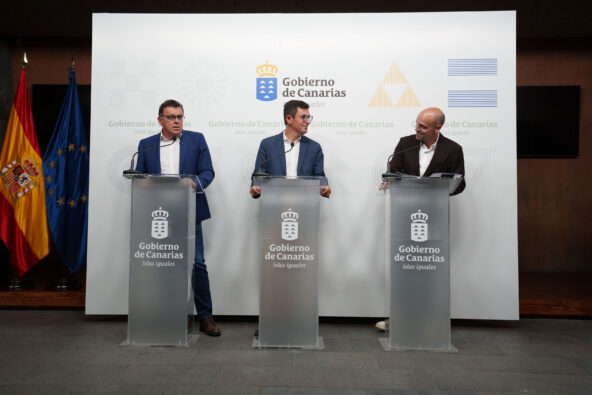
The event also featured a discussion between the Regional Minister for Social Welfare, Equality, Youth, Children and Families, Candelaria Delgado; the Deputy Regional Minister for Education, José Manuel Cabrera; the Deputy Regional Minister for Employment, Isabel León; and the Director-General for Mental Health and Addictions, Fernando Gómez-Pamo.
In her speech, Candelaria Delgado pointed out that no one should have to face a situation of emotional vulnerability alone, particularly young people, who are confronted with «a changing world and unprecedented social, digital and economic pressures», and that the response must therefore be «cross-cutting».
The Deputy Minister for Education outlined the measures being taken to ensure that schools act as «protective environments», fostering a «healthy and wholesome» atmosphere, and to this end, the role of the educational psychologist and the staff wellbeing unit have been introduced, whilst the Deputy Regional Minister for Employment, Isabel León, called for tailored and flexible educational pathways so that pupils facing difficulties in this area do not drop out of school and are given a second chance.
For his part, the Director-General for Mental Health and Addictions, Fernando Gómez-Pamo, emphasised that «we cannot define a person by a diagnosis» and called for continued efforts to combat «the invisible and painful barrier of stigma».
«We can all go through difficult times in our lives and feel overwhelmed, and we need to ensure that the question ‚How are you?‘ ceases to be a mere formality and that we are prepared to listen to the answer; and if that answer is ‚I’m not well‘, then we must give ourselves permission to talk about how we’re feeling,» emphasised Gómez-Pamo.



«Young people in the Canary Islands demand mental health funding»
No comments on this article yet.