

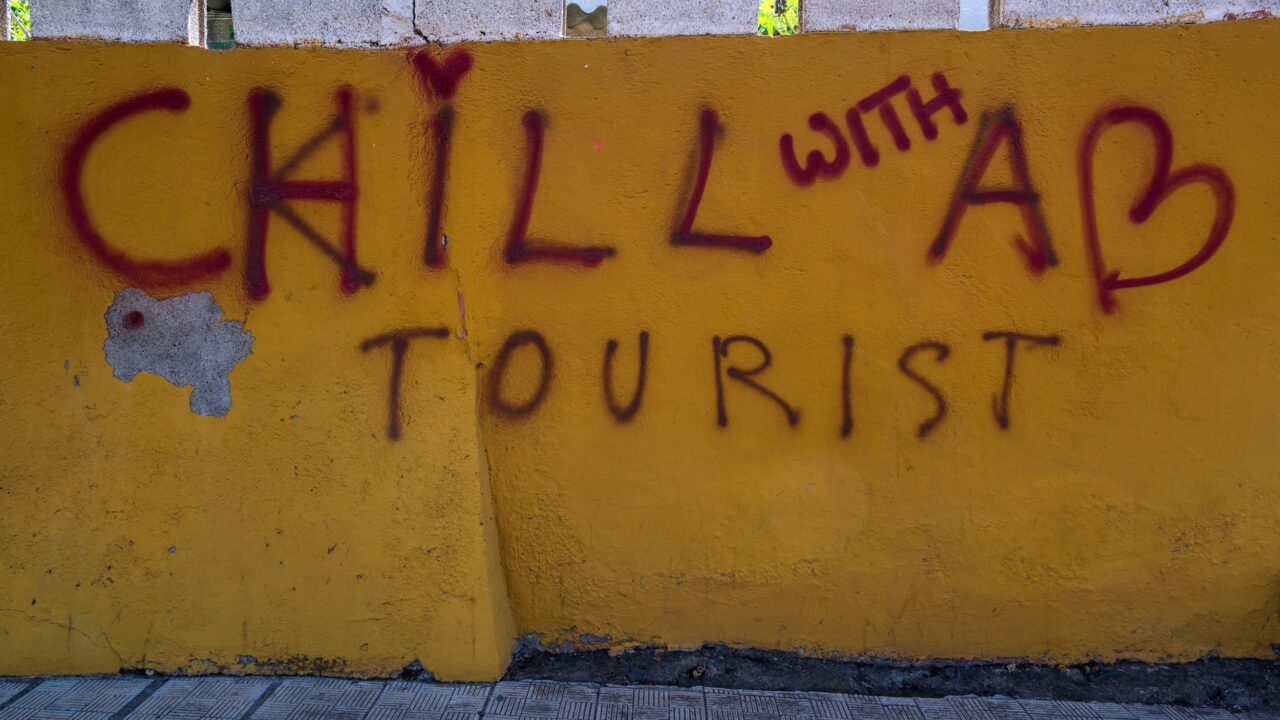
«Stolen Time: Tourism, Neocolonialism and Uprooting on Gran Canaria» is the title; the original is «La hora robada. Turismo, neocolonialismo y desarraigo en Gran Canaria«. Under this title, a documentary film offers a cinematic account of the protest against mass tourism in the Canary Islands. It depicts the grassroots protest movement that has been growing for years in response to the consequences of tourism.
These citizen protests go by many names, but at their core they all pursue the same goal: the Canary Islands must stop gentrification. This is demanded by groups such as «La Aldea Sostenible», «Las Kellys Gran Canaria» and «Tamaranae Activistas». Their campaign centres on a fundamental concern: the right to live where many of them were born, and to have economic, social and cultural prospects there too.
From the perspective of many activists, the region’s current development model relies too heavily on tourism and services. The sector is breaking economic records, whilst at the same time discontent is growing amongst sections of the population. Demonstrations and protests are becoming increasingly frequent. Critics speak of a new relationship of economic dependency and describe it as a form of neo-colonialism. It is precisely this that is now being explored on film.
Documentary on the tourism protests in the Canary Islands
Some of these voices can now be heard in a documentary film that highlights the social consequences of tourism on Gran Canaria. Behind the film is a team of young media professionals. Mica Pavone, Alejandra Ceballos, Andrea Oyagüe, Sara Gestal and Pablo Santiago are the directors; the project was produced by Agareso, a Galician organisation for communication and social change. The work was supported by the Regional Government of Galicia and the University of Vigo.
The film, which lasts around 35 minutes, has already been screened in several Spanish cities, including Santiago de Compostela, Vigo and A Coruña. It has also been shown on Gran Canaria itself. The film focuses on the social and territorial consequences of the current model of tourism. The documentary illustrates how the rising demand for holiday accommodation and investment in tourist infrastructure is increasing pressure on residents as housing becomes scarce. In many neighbourhoods, rents are soaring, whilst at the same time local traditions are disappearing.
This trend is particularly evident in the Guanarteme district of Las Palmas. Residents there report rapid changes to their neighbourhood. More and more flats are being taken over by tourists, and locals are struggling to find affordable housing. Activists warn of a trend they describe as gentrification: long-standing residents are being forced to leave their homes, whilst new investors are altering the character of the neighbourhoods.
In the middle of the film, numerous people affected by these changes have their say. Workers in the tourism industry, neighbourhood initiatives and social activists speak of rising living costs, precarious working conditions and growing social inequality.
Film crew accompanies activists in Gran Canaria for five weeks
For five weeks, the production team travelled across Gran Canaria with their camera to capture these stories, as filmmaker Pablo Santiago explains. In the process, it became clear that the effects of tourism are not merely economic in nature, but have a profound impact on the everyday lives of many people. Many of those interviewed wanted to share their experiences, says Pablo Santiago, because frustration and dissatisfaction are building up to an increasing extent.
Initiatives such as Derecho al Techo also denounce the fact that more and more people are being affected by evictions, extremely high rents and the loss of social networks. Workers in the service sector and other economically vulnerable groups are hit particularly hard by this trend. For them, it is clear that the right to housing must not take a back seat to economic interests.
Gran Canaria speaks for other tourism hotspots too
The film about the protests on Gran Canaria is not merely a cinematic project, but also a contribution to the public debate on sustainable development, social justice and the management of natural resources.
The filmmakers do not view the situation in Gran Canaria as an isolated case. Many of the problems depicted can also be observed in other regions heavily reliant on tourism. According to those involved, the increasing pressure on housing, the intensive consumption of resources and economic dependence on tourism are among the key challenges facing many holiday regions worldwide.
Following the various live screenings, the film is also set to be available to stream. A date for this has not yet been set. You can watch the trailer now in the video above.




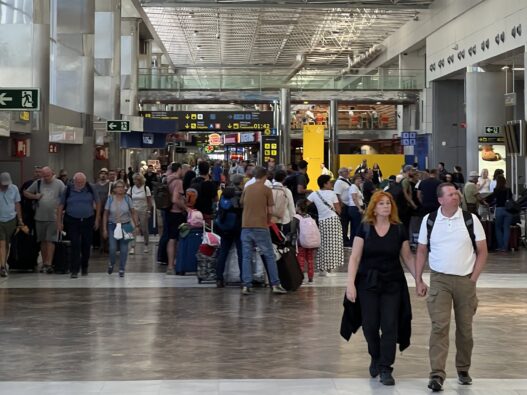
«New documentary: Gran Canaria - caught between a tourism boom and a housing crisis»
No comments on this article yet.