

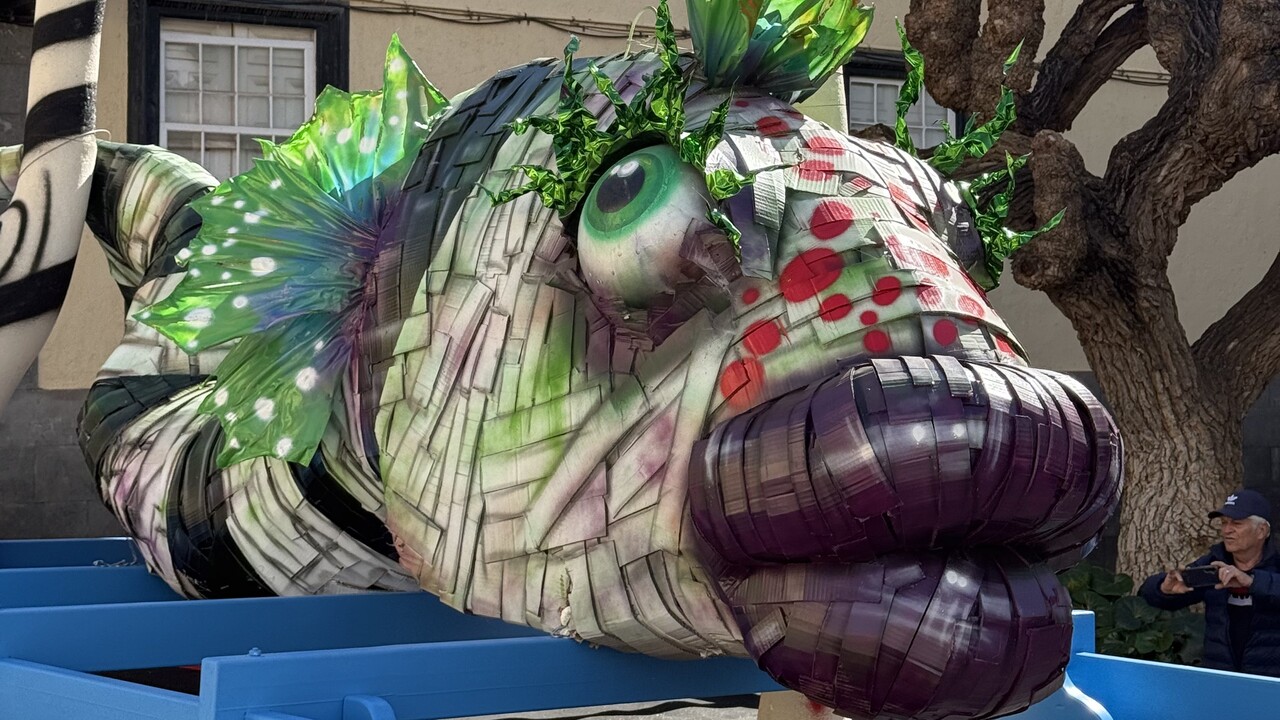
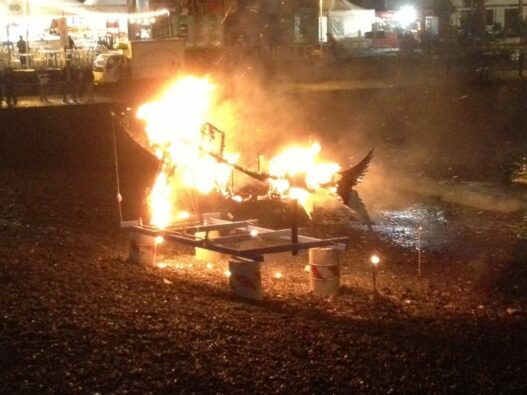
The ‚Entierro de la sardina‘ is undoubtedly one of the highlights of the Canary Islands Carnival. The giant papier-mâché fish is carried through the streets amid the loud wailing and fervent prayers of thousands of mourners, before being burnt at a central location.
Whilst the burning of Hoppeditz or Nubbel in the Rhineland carnival marks the end of the colourful festivities, in many parts of the Canary Islands this is when the fun really gets going. The saying ‚it’s all over on Ash Wednesday‘ therefore does not apply to the Canary Islands. There, the general lament over the ‚loss‘ suddenly gives way to dancing and a festive mood.
Whilst in Tenerife’s capital, Santa Cruz, the grand ‚Corso‘ – the world-famous carnival parade – always takes place the day before, Puerto de la Cruz in the north of the Canary Islands goes a step further: Here, the equally well-known street carnival only enters the home straight that evening.
Where does the ‚burial of the sardine‘ come from?
But where on earth does this strange custom come from? Attempts to explain it point in various directions:
The ‚Chinese whispers‘ principle?
One theory suggests that the custom originated in Madrid in the mid-19th century. As Lent began on Ash Wednesday even back then, the townspeople would travel to the countryside to symbolically bury something there. Since no meat was eaten during Lent, people would symbolically bury the ribs of a piglet, known as a ‚cerdina‘.
This custom became a tradition and spread throughout the country. However, it is said that over time a serious error crept into the oral tradition, whereby the word ‚cerdina‘ was mistakenly changed to ’sardina‘, meaning sardine.
A student prank?
Another tradition holds that, at the same time and in the same place, a group of students decided to organise a funeral procession led by a sardine. This procession was intended to revive the carnival one last time, whilst also symbolising the forthcoming period of fasting and abstinence.
A spectacularly failed fish feast?
Another tradition holds that King Charles III of Spain (1716-1788) forbade the consumption of meat on Ash Wednesday. To stave off hunger, he is said to have organised a huge feast at which vast quantities of sardines were to be served. However, on Ash Wednesday, the weather turned unseasonably warm, causing the sun to render the sardines inedible.
Worse still, such a foul stench spread that it put both locals and visitors off fish for good. To contain the stench and still be able to celebrate, the people organised a funeral in the surrounding countryside on the spot. The spontaneous procession was so well received that it developed into a tradition.
A grand offering?
Still other accounts state that the people made a symbolic offering to ask for a bountiful catch of fish. It was also said to be a prayer for the fertility of livestock. However, given the period in which the custom developed, this version is considered the least likely.
It is no longer possible to determine with any certainty where the custom of the ‚burial of the sardine‘ actually originated. What is certain, however, is that the myth surrounding the sardine still holds a firm grip on carnival-goers in the Canary Islands.
In some parts of the islands, this custom actually marks the official start of the colourful Carnival celebrations in the streets. So it’s well worth keeping an eye out for one of the many parades on Ash Wednesday evening.







«The Funeral of the Sardine - a quirky tradition at the Canary Islands Carnival»
No comments on this article yet.