

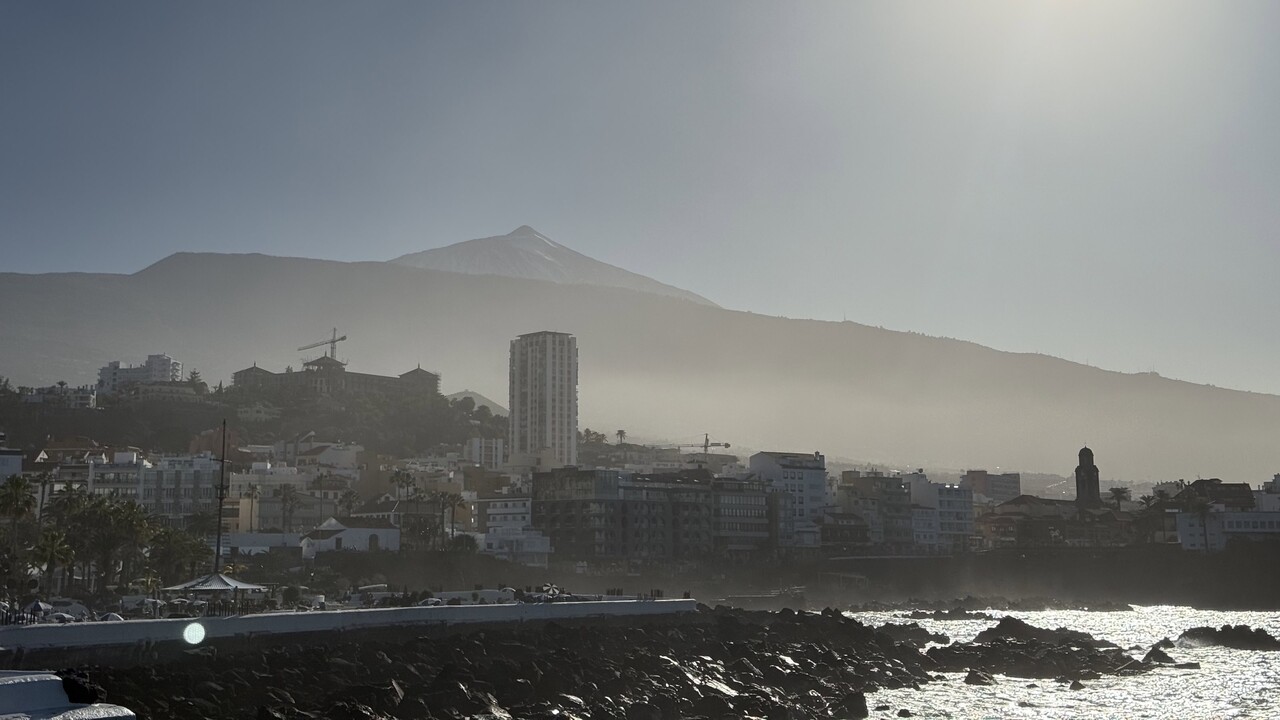
The largest of the Canary Islands is remembering who once brought tourism to the region. Support for the town has now been announced. The island’s administration has set out the next steps for the redevelopment of Puerto de la Cruz. The tourist town in the north of Tenerife is set to become more modern. To this end, several projects that have long been on hold are to be implemented.
The extensive redevelopment was triggered by the approval of a new agreement with the Regional Department for Territorial Policy and Water. This agreement is seen as key to enabling strategic projects within the city to be taken forward.
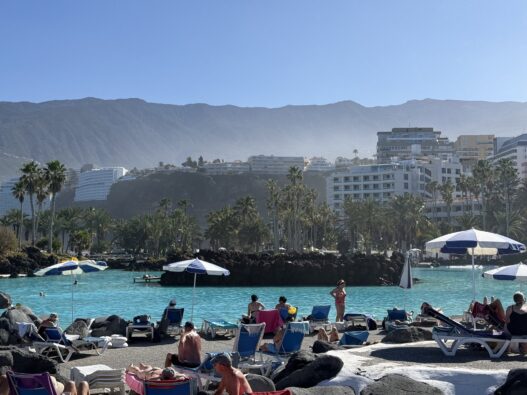
Three areas are primarily affected: the area surrounding the seawater park, the planned San Felipe sports complex and the site of the new Centro de Deportes Acuáticos de Tenerife (CDAT) outdoor swimming pool. This is based on a further amendment to the municipal planning document PMM1, which stands for ‚Modernisation, Improvement and Growth Plan 1‘.
Puerto de la Cruz is to get new car parks, footpaths and more open spaces
The plan provides for specific improvements to the urban infrastructure: better mobility, additional parking spaces, new footpaths, more freely accessible open spaces, the expansion of the seawater park and further sports facilities. Lope Afonso, Vice-President of the Cabildo and Island Councillor for Tourism, described the decision as a strategic step that would get key measures back on track.
The project has also gained significance following a report published in February 2026 by the Spanish Ministry for Ecological Transition. In the report, the Ministry highlighted difficulties in addressing the environmental impacts associated with the port infrastructure. The new approach is intended to speed up the procedures and prevent further delays.
Sustainable redevelopment as the goal
Alicia Leirachá, the island’s director for strategic projects, explained that the agreement is intended to facilitate the tourism-related regeneration of Puerto de la Cruz. The plans include modern and sustainable infrastructure.
Mayor Leopoldo Afonso said that revising the plan would not only put shelved projects back on the agenda; it would also lay the foundations for orderly, sustainable and competitive growth, which would benefit both municipal services and the city’s appeal to tourists.
The first deputy mayor, David Hernández, highlighted the environmental aspect: he said that restoration and adaptation to climate change were key elements of the model. The second deputy mayor, Alonso Acevedo, said that this approach would enable the council to regain control over timetables and avoid new administrative bottlenecks.
Puerto de la Cruz as a destination for regenerative tourism
The Island Council explicitly links the redevelopment to the town’s economic and social development. Puerto de la Cruz is to be strengthened as a destination for regenerative tourism in the north of Tenerife and expand its role in the Orotava Valley.
Recently, the vacancy rate in Puerto de la Cruz had risen. In addition, there is a backlog of renovation work in public spaces and in many hotels. According to their own statements, the Island Council and the town are responding with this newly published plan to a long-standing demand from Puerto de la Cruz and the tourism sector: a transformation, without further delays, into a modern, sustainable and competitive town.





No comments on this article yet.