Whale watching off Tenerife’s south coast all year round
Around 250 whales and dolphins live permanently in twelve groups off the island, with short-finned pilot whales the most common. Boats leave from Los Gigantes, Playa de las Americas and Costa Adeje for about 55 euros per adult.
Johannes Bornewasser is an author, journalist and editor-in-chief of Teneriffa News. He is regarded as a recognised expert on the Canary Islands. Bornewasser is also responsible for the editorial content of the website.
9 min read
Photos: Teneriffa NewsWhale watching: The Canary Islands are the perfect place to watch whales all year round.
Many visitors to the Canary Islands set aside at least one day to go on an unforgettable whale-watching trip out onto the Atlantic Ocean. The experience of seeing whales in the wild is unforgettable – provided, of course, that you’ve actually spotted whales and dolphins with the right tour operator.
Which species of whale can be found off the coast of Tenerife?
In total, around 250 whales and dolphins live permanently off Tenerife, organised into twelve families. The chances of spotting at least one of them are therefore very high. In addition, many whales pass through the waters off the Canary Islands. With the right timing, you too can encounter these visitors.
Pilot whales off Tenerife
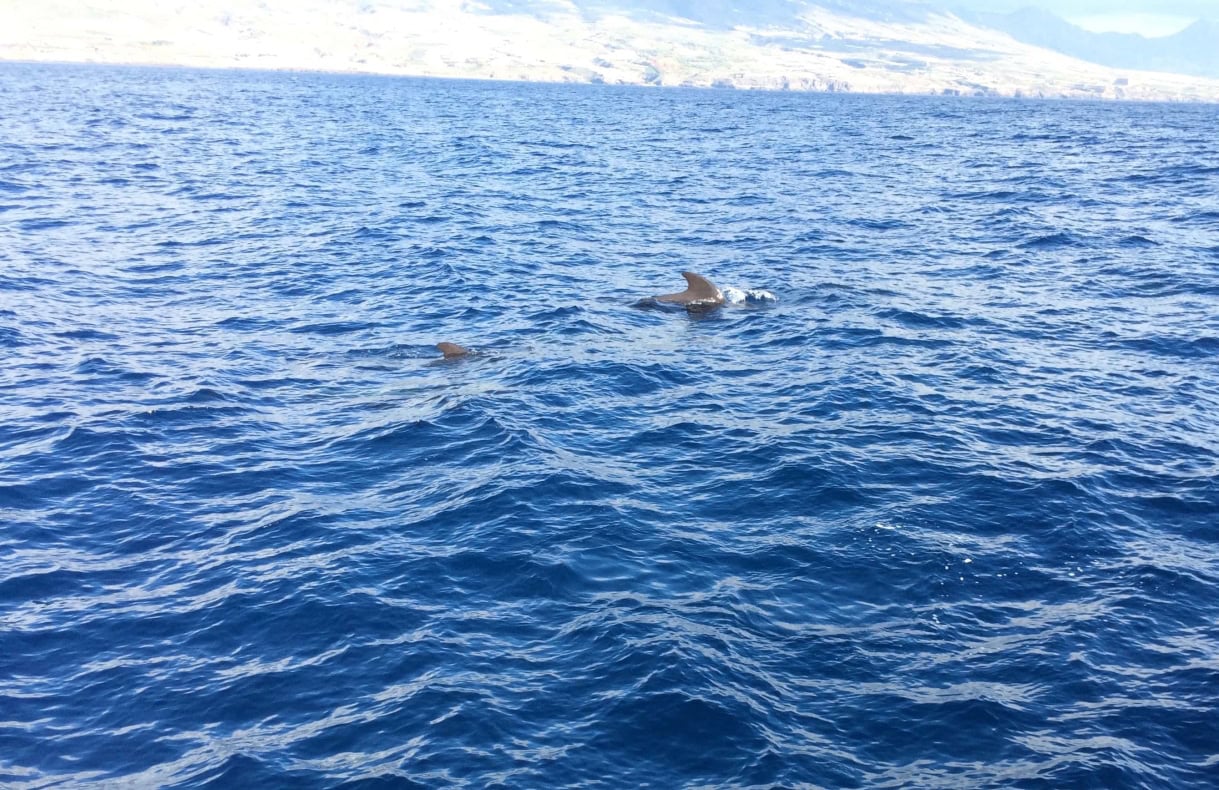
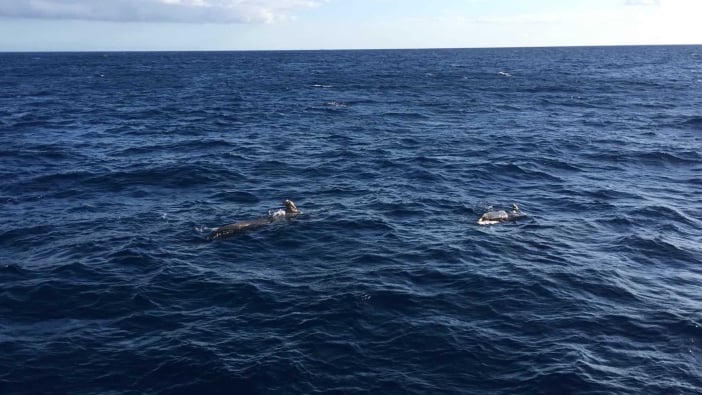
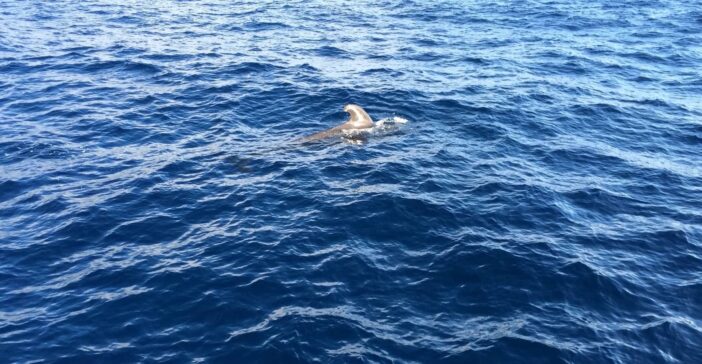
Photo: Johannes BornewasserDozens of pilot whales live off Tenerife. Photo: Johannes Bornewasser
The most common species of whale found around Tenerife is the short-finned pilot whale. It is also known as the piloot whale. Meanwhile, the term ‚whale nursery‘ is also doing the rounds in Tenerife, as it is particularly common to spot groups of mothers with their calves, which are a joy to watch.
Adult pilot whales grow to between 3.5 and seven metres in length and can weigh up to four tonnes. A characteristic feature of these marine mammals is their spherical head, which is usually almost beakless. The animals often live in pods of between ten and 30 whales. They frolic in deep water, but may also swim into shallower areas in search of food.
Dolphins love the waters off Tenerife
Furthermore, dolphins are frequently spotted in the waters off Tenerife. They enjoy accompanying whale-watching boats, delighting participants on whale-watching expeditions with their lively nature. Many of them live in the waters to the south-west of Tenerife. Particularly during their annual migration to their feeding grounds in spring and on their return journey in autumn, large numbers of dolphins pass through the Canary Islands‘ waters around Tenerife.
Other whale species off the Canary Islands
From time to time, blue whales, humpback whales, fin whales, sperm whales and orcas are also sighted off the Canary Islands. Unlike pilot whales, however, these species are often not resident in the area but usually just pass through the waters.
Whale-watching operators on Tenerife
Many whale-watching operators set off on their tours from the south or south-west of Tenerife. The ports from Los Gigantes via Playa de las Americas to Costa Adeje are particularly well known for this. The whale-watching tours follow different routes and therefore vary in duration. However, you should allow at least two hours. On the longer tours in particular, a light snack is often included on board.
Whale watching prices in Tenerife
Prices vary depending on the type of boat, the number of participants and the duration of the trip. On average, whale-watching trips off Tenerife cost around 55 euros per adult. Children pay a reduced rate. You’ll find a selection of options below:
Book whale watching in Tenerife
What whale-watching expeditions are available?
Some of the trips even include a short stop for a swim in special coves off the Canary Islands. These tours therefore take a little longer. The chance of spotting a pod of whales or dolphins on this route is slightly higher, as the trip initially follows the coastline.
Swimming stop off the Masca Gorge
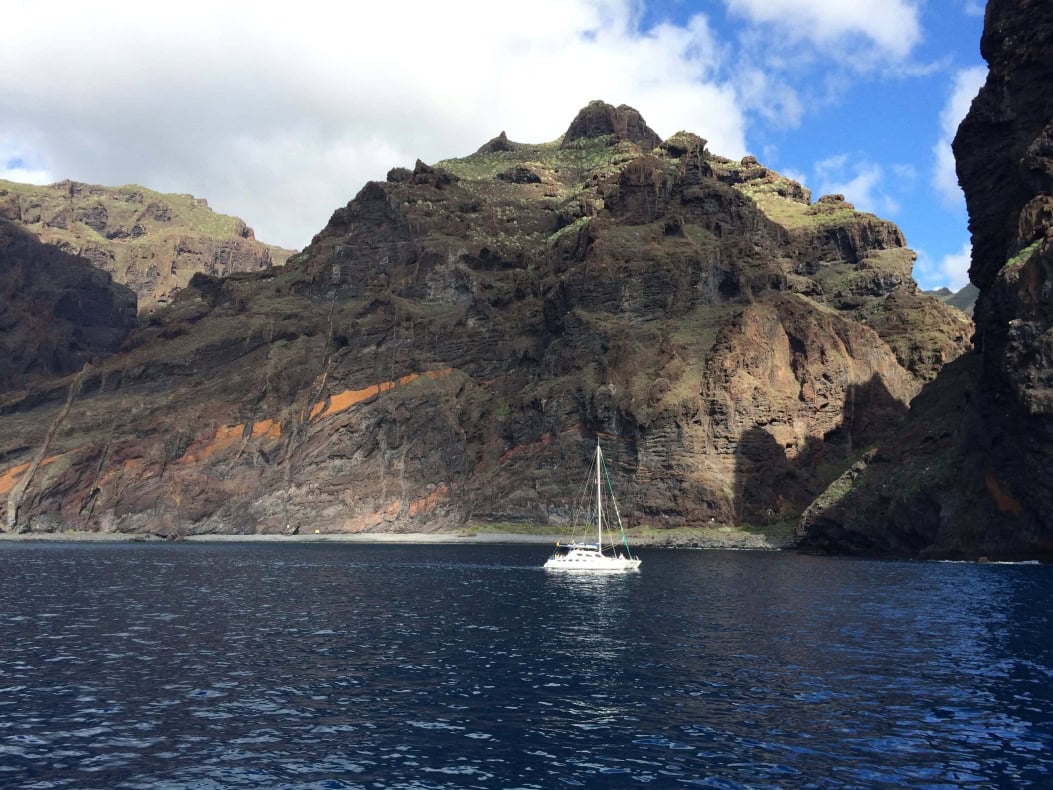
In the famous Masca Bay, participants on the whale-watching expedition can have a quick dip and enjoy the sun. Photo: Johannes Bornewasser
The most popular bay for swimming is the one off the Masca Gorge. It is one of the most beautiful on the island, but is also correspondingly busy. The crystal-clear water tempts many expedition participants to go for a swim. Others take the opportunity to sunbathe on deck.
Most operators who drop anchor at Masca also use the stop for a snack. Paella or sandwiches are often on offer. After the swimming stop, the route then leads straight out to the open sea to see the whales.
When the expedition boats encounter whales
Pilot whales and pilot whales are the main species living between Tenerife and the neighbouring islands. Often, a pod of whales appears as if out of nowhere. The boats then switch off their engines – a rule designed to prevent the whales from being injured by the propeller.
The rules state that boats may only approach the whales from the side, and to a maximum distance of 60 metres. A restricted zone applies at an angle of 30 degrees in front of and behind the animal. Furthermore, the sound of the engine can startle these sensitive animals. Only once the whales have moved on does the ship cautiously pick up speed again to approach them once more.
Many of the animals are very curious, which is why the whales come very close to the boats or even swim right underneath them. The sight of these marine mammals and the loud hissing sound they make as they breathe through the blowhole on their backs is truly majestic. That is why it is so important not to support the ‚black sheep‘ amongst whale-watching operators.
Whale Watching: Tips & Sustainability
If you’re planning a whale-watching tour, for the sake of the animals, you should ensure you book your trip with a certified operator. These operators respect the environment and animal welfare. One well-known organisation in this regard is, for example, the ‚Atlantic Whale Foundation‘. It is dedicated to the protection of the animals and the ocean.
Certified whale-watching operators
Operators who hold all the necessary licences and prioritise animal welfare are awarded the «Barco Azul» or «Blue Boat» certificate. Any operator bearing this seal is a certified commercial operator. The crew are trained in how to handle the animals, and interactions with guests are always conducted with animal welfare in mind. You can download a list of these operators here.
By the way: Some time ago, the Atlantic Whale Foundation launched an experiment at Los Gigantes. The aim is to try and communicate with the animals through music. The ‚D Nome Project‘ aims to build a database of whale sounds to help with the conservation of these unique creatures.
Our tip: Sunset over the sea
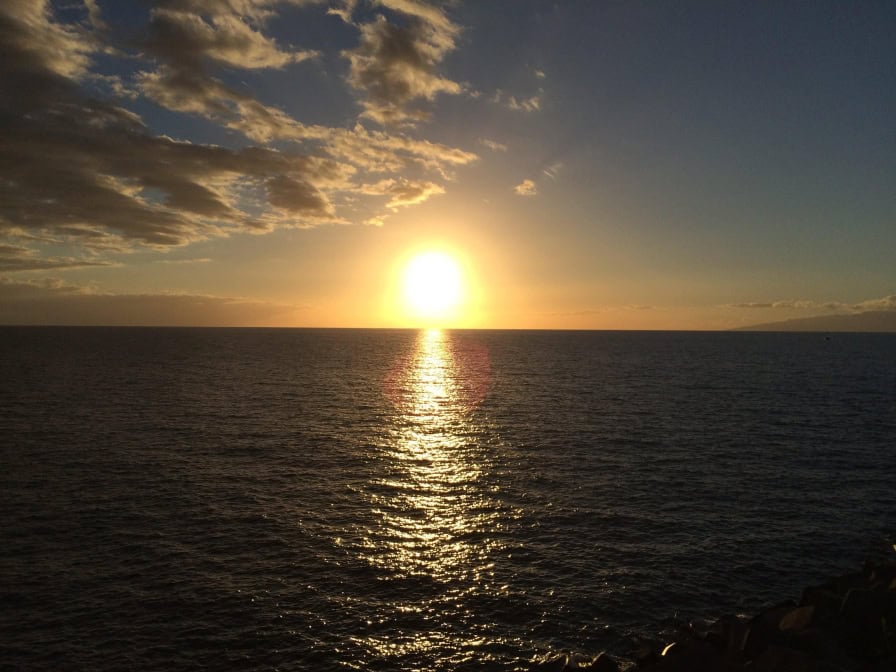
Photo: Johannes Bornewasser
Some whale-watching expeditions end at sunset, making for an unforgettable day. Photo: Johannes Bornewasser
It’s particularly lovely when a wonderful day at sea ends not only with an encounter with a pod of whales, but also with a sunset over the sea. For visitors to Tenerife in winter, we recommend an afternoon tour. These usually end in the early evening as the sun sets. It’s best to speak to the tour operator before booking and specifically ask for a tour that includes the sunset.
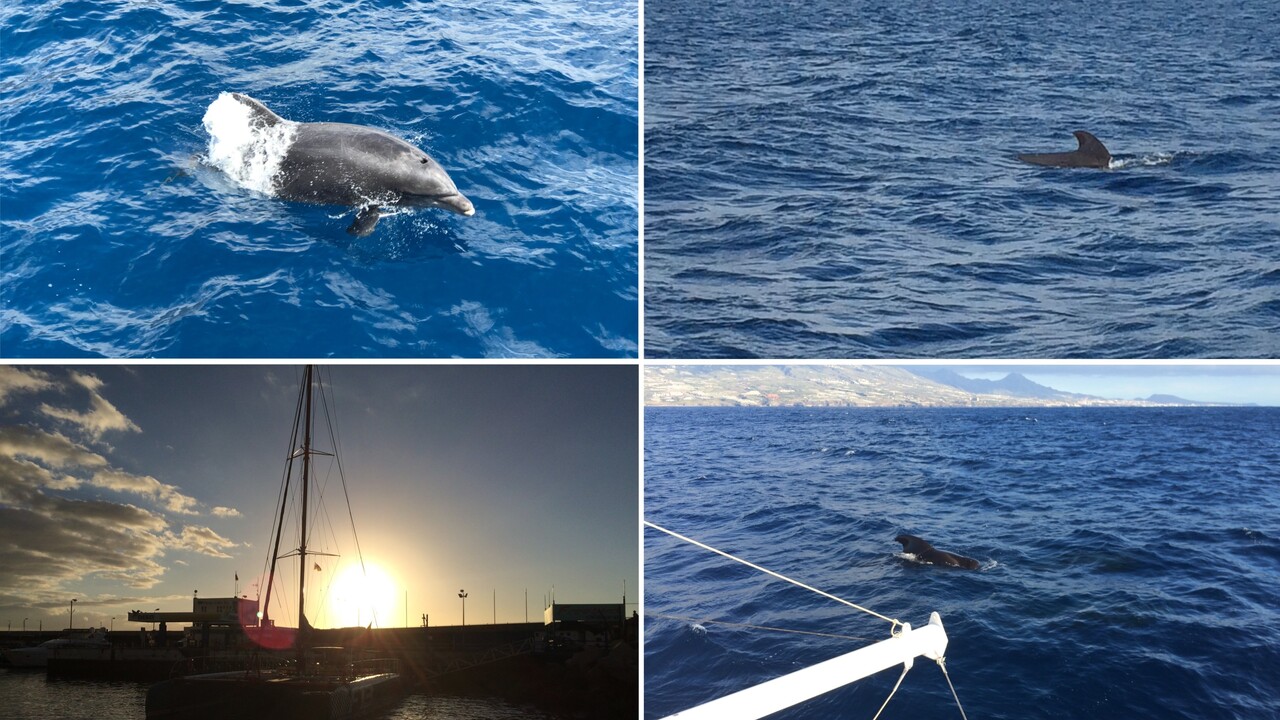
Photos of whale watching in Tenerife
See now:
Photos of whale watching in Tenerife
More common questions about whale watching
Below, we answer some common questions we receive about whale-watching expeditions in Tenerife:
How long does a whale-watching trip last?
The duration of the tour in particular should be taken into account when planning. Some expeditions end after less than two hours. Other tours last half a day. Naturally, the chance of seeing whales and dolphins is much higher on these longer tours. Please speak to the tour operator about the exact duration before booking.
What if I get seasick easily?
You should consider taking a tablet for travel sickness. However, these should usually be taken about half an hour before the boat sets sail, as they will no longer be effective if taken later. Be sure to speak to your GP about this!
What’s the best way to get there?
Some tour operators offer a shuttle service and will even pick up participants from the other end of the island. The advantage is that you don’t have to worry about getting there. The downside, however, is that the journey takes a long time and you’ll arrive with a large group. This makes it difficult to secure the best spots.
Where’s a good place to park?
If you’re travelling by car, we recommend a multi-storey car park away from the harbours. Parking there is often more expensive and the spaces are very busy. It’s usually worth opting for a supermarket or hotel car park near the harbours instead.
What are the best spots?
The best spots are often on deck, quite near the front. It’s best to aim to be there about half an hour before boarding. That way, you’ll usually arrive before the shuttle service does and will therefore be near the front of the queue.
What should I take with me?
You should definitely bring sun cream and a sun hat. Sunglasses are also recommended. Make sure your camera or mobile phone is secured so that nothing goes overboard. As soon as whales appear, things get quite hectic on deck and your device could fall over or even go overboard if someone accidentally bumps into you. It’s also important to bring at least one towel so you can dry off after the swimming stop.
Are there toilets on board?
Typical excursion boats have (basic) toilet facilities. Smaller excursion boats, however, do not have toilets. It’s best to enquire when booking.
Is whale watching safe?
Certified operators must demonstrate that they can ensure the safety of participants. For this reason, it is advisable to book with such an official operator.






«Whale Watching on Tenerife - all the tips and tricks»
No comments on this article yet.