

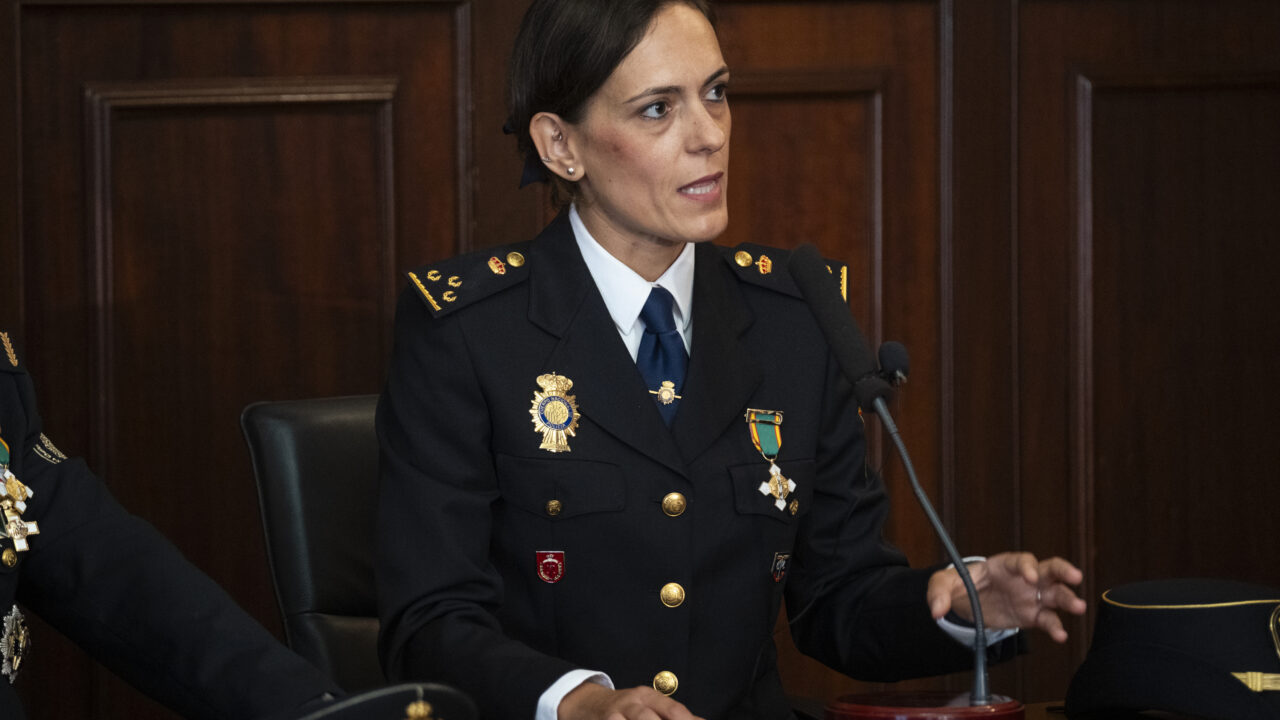
The National Police have today explained that the arrest of the man accused of raping and murdering a woman whom he approached in a garage in the Añaza neighbourhood of Santa Cruz de Tenerife nine years ago was made possible by a partial genetic analysis of two samples, which enabled investigators to trace the perpetrator’s family lineage until he was located; they have not ruled out the possibility of further victims.
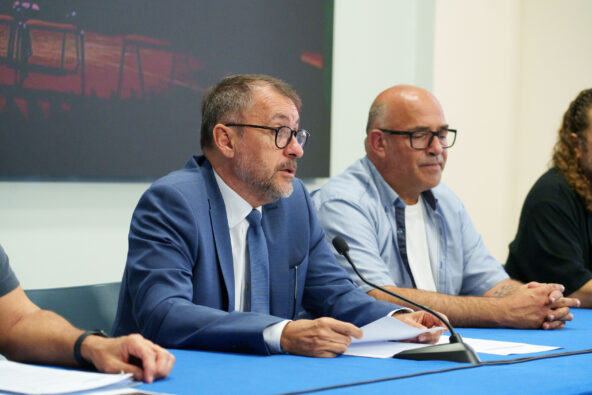
This was explained by Inspector Gara Toledo during a press conference, at which she provided details of the ongoing investigation, alongside the Government Delegate for the Canary Islands, Anselmo Pestana, the Chief of Police, Jesús Gómez Martín, and Chief Inspector Javier Sarmiento.
Toledo explained that it all began when DNA samples taken from the victim’s body and from a handkerchief that the suspect had left in the area where he apparently attempted to assault another woman six months after that crime yielded a partial match, which corresponded to a man who had been arrested five years ago for another offence.
Añaza: Partial DNA analysis leads to a suspect
«Normally, DNA identification is carried out using the complete DNA sequence. In this case, what is novel is that only a part of it is used, specifically, just the Y-chromosome haplotype. This provides us with a very significant piece of information: that the perpetrator is related through his father to this man, who was arrested on another charge,» said the inspector.
She went on to say that, thanks to this evidence, which is based on the distinctive nature of the Y chromosome, a unique combination of genetic markers that is passed on almost unchanged from father to son, they were able to establish that there is a blood relationship between the two individuals, which could range from great-great-grandparents to great-grandparents, siblings, cousins or uncles and aunts, hence the complexity of the investigation.
It was at that point that they began to cross-reference genetic data, which established a physical profile based on probabilities, with parish records and registers dating from the early 19th century to the present day; this involved manually examining documents from 1800 to the present day in order to draw up a family tree.
«The family is spread across various areas of the island, although the most likely one, the one we focused on from the outset, was in the vicinity of the Añaza neighbourhood. Specifically, in the Santa María del Mar area, which is barely a kilometre away. And from there, starting with the oldest, we worked our way down, taking statements and scouring social media,» said Toledo.
A «complicated» task, she continued, as not everyone «has their children registered» and there were «many relatives on the father’s side», whilst she stated, in response to questions from journalists about whether or not the suspect had been stalking the victim before committing the crime, that the «investigation is still ongoing», and therefore they cannot reveal any further details.
What she has confirmed is that, after analysing the data and identifying the possible perpetrator of both offences, they proceeded to collect all the «samples and evidence of the crime that had been left on the public highway» which contained a DNA sample from the accused, such as a handkerchief or a soft drink can, in order to confirm the match and proceed with his arrest.
Suspicions of further victims
The inspector also stated that they suspect there may be «quite a few more victims» at the hands of the accused, and so she took the opportunity to appeal to anyone who has been assaulted and «may not have dared to report it» to contact the police at the station on Avenida Tres de Mayo in Santa Cruz de Tenerife.
«That will be our next step: to look for more victims. It is well known that in this type of crime, people often do not dare to report it out of fear, especially if the perpetrator is someone they know or a neighbour,» she explained.
The inspector thanked everyone who had been involved in the investigation over the past nine years, particularly the Tenerife National Police team, as well as the Forensic Analysis Unit and the DNA Biology Laboratory. EFE
Avg/SPF
(photo)
1012111






Comments (0)
No comments on this article yet.