Loro Parque in Puerto de la Cruz, show times and visitor tips
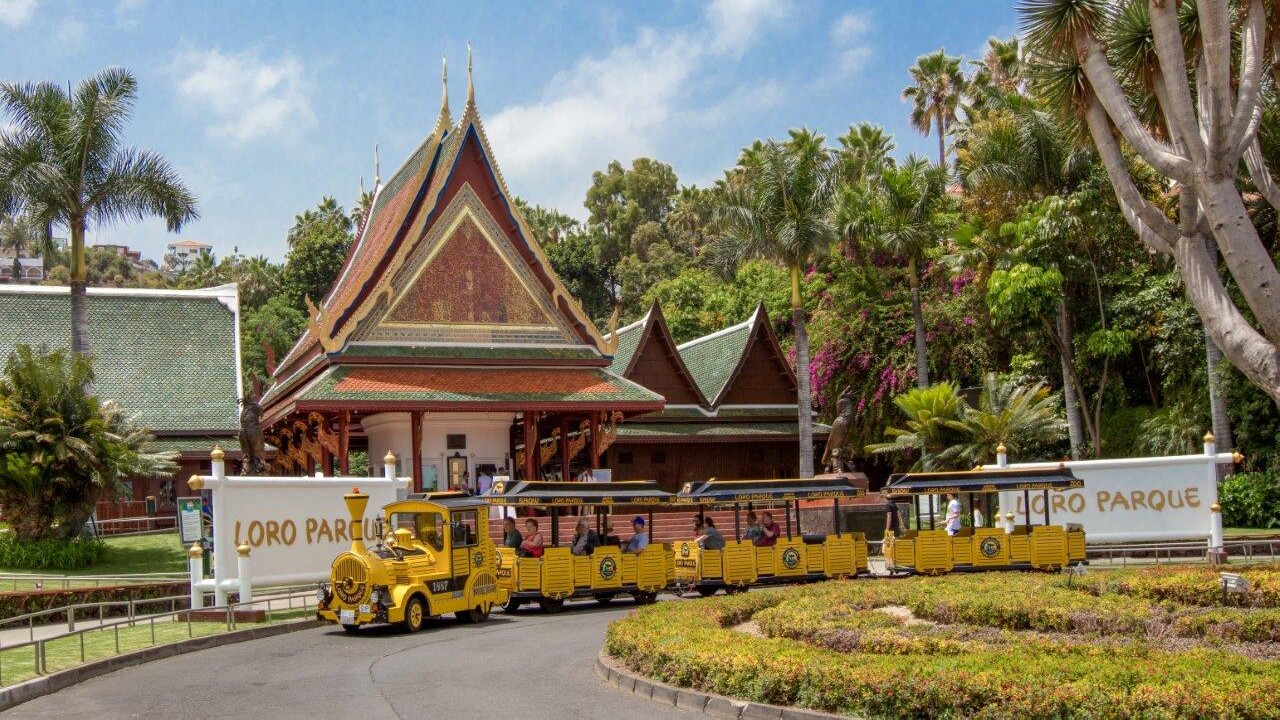
The free Loro train leaves from Plaza de los Reyes, and there is parking at the gates. Four animal shows run daily, while a guided Discovery Tour of about 1 hour 45 minutes costs €11 extra and is booked at the entrance.
Johannes Bornewasser is an author, journalist and editor-in-chief of Teneriffa News. He is regarded as a recognised expert on the Canary Islands. Bornewasser is also responsible for the editorial content of the website.
17 min read
Photo: Loro ParqueLoro Parque on Tenerife welcomes millions of visitors every year. We've put together some useful tips for your visit and share all sorts of interesting facts about the zoo.
Loro Parque on Tenerife has long since achieved worldwide fame. Originally opened as a bird park specialising in birds, with the world’s largest collection of parrots, the park has since blossomed into a sort of animal theme park for the whole family.
Loro Parque now offers a true diversity of species, featuring the most impressive animals from land, water and the air. The park takes its name from the Spanish word ‚Loro‘ (parrot).
How to get there
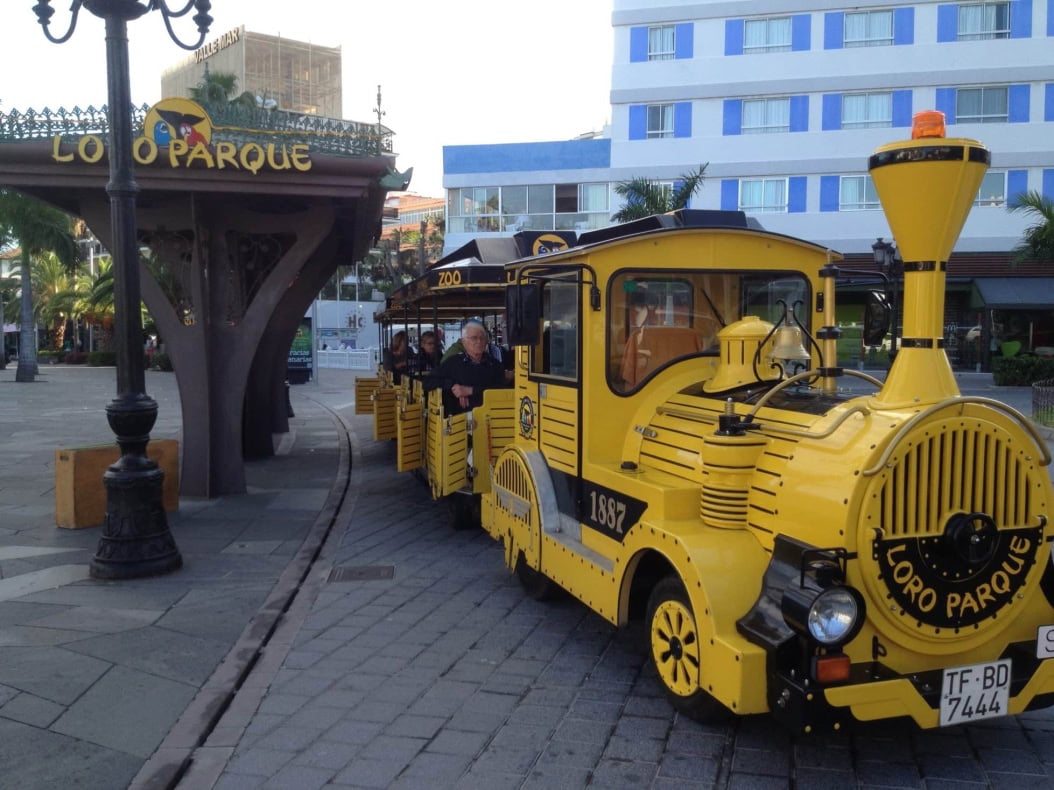
The best way to reach Loro Parque is by a free tourist train that departs from the centre of Puerto de la Cruz. However, it’s also easy to get there by car: there are plenty of parking spaces available.
Photo: Johannes BornewasserThe Loro Bahn departs from the Plaza de los Reyes, near the promenade in Puerto de la Cruz. Photo: Johannes Bornewasser
Loro Parque: Guided tour or on your own?
The park is easy to explore on your own. You’ll be given a map at the entrance, and the attractions are clearly signposted. It’s best to plan your route around the various shows. This way, you’ll have the perfect mix of exploring at your own pace and sitting back to enjoy the different performances throughout the day.
Alternatively, there is also the Discovery Tour. On this tour, visitors walk through the park in small groups with a guide for around 1 hour 45 minutes. The tour offers a number of behind-the-scenes insights. For example, participants on the guided tour are allowed to observe the orcas through a window in the basement of the Orca Ocean. In addition, there is information available at many points that ordinary visitors do not receive in this form.
The Discovery Tour can be booked in the entrance area directly with the guides. It costs an extra 11 euros and is available at various times throughout the day. The meeting point is at the park entrance.
The times of the various shows
Four different animal shows await visitors every day. There are also other attractions with separate opening times. You can find out exactly when each show takes place below:
The Sea Lion Show
The sea lion arena is situated right next to the entrance. In five shows, these lively and acrobatic animals demonstrate their full range of skills. The shows take place at 10.00 am, 11.00 am, 1.45 pm, 2.30 pm and 3.45 pm.
The Loro Show
From there, head on towards the Loro Show. This is where the park’s most skilful parrots are showcased. From free flight to maths problems, visitors are treated to all sorts of tricks. The shows take place at 10.45 am, 12.30 pm, 2.30 pm, 3.30 pm and 4.45 pm.
The Dolphin Show
In four further performances, the park’s dolphins show off their tricks. The dolphinarium is situated right next to the white tigers. These lively swimmers perform at 11.15 am, 1 pm and 4.15 pm.
The Orca Show
Not far from the dolphinarium, you’ll find the orcas. This is also the most controversial show. Critics say that orcas belong in the wild, whilst Loro Parque points, for example, to one resident who would not be able to survive in the wild. It’s up to you to decide whether to watch the show. If you do, the three performances take place in Orca Ocean at 11.45 am and 3.15 pm.
The penguins
You can also admire the penguins waddling about at Planet Penguin. The separate building opposite the sea lion arena is open daily. The same applies to the large aquarium with its underwater world.
Nature Cinema in HD
The name ‚Nutravision‘ also refers to a cinema. Under a large mirrored dome, you can watch an exciting environmental documentary in HD quality at 11.45 am, 2.45 pm and 5.15 pm.
Loro Parque also offers many other attractions. These include a large, walk-through outdoor enclosure housing various species of birds, as well as numerous aviaries, a tiger enclosure and an orca rollercoaster for children.
History and layout of Loro Parque
Since its opening in 1972, Loro Parque has been one of the top attractions on Tenerife. The zoo’s founder, owner and managing director is the German Wolfgang Kiessling, who now also runs the Siam Park on Tenerife.
He designed Loro Parque to resemble a tropical garden. After passing a huge koi pond right at the entrance, visitors are first photographed with (now virtual) parrots. The photos, some of which are very beautiful, can be purchased at the exit at the end of the visit.
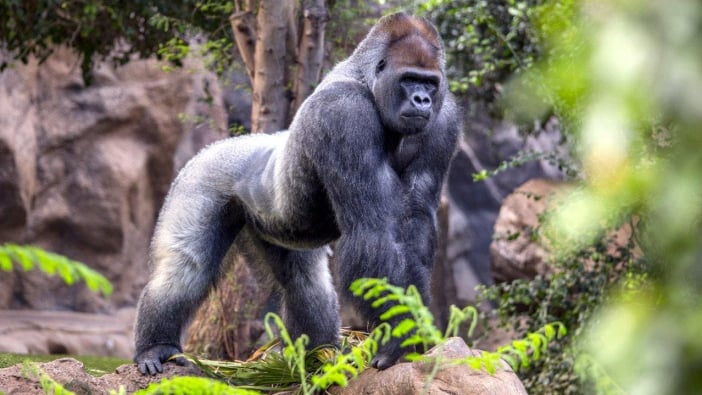
Before the visitors are finally able to explore the park at their own pace, they are guided to the park’s star attractions: just behind the koi pond is the large Gorilla Rock, where they can marvel at a real silverback. From there, the path branches off to the various highlights of Loro Park.
Photo: Loro ParqueHis gaze and posture clearly say: «I’m the boss here!» Photo: Loro Parque
Spread across several levels, visitors can enjoy aquariums, large bird aviaries and various enclosures, as well as small ponds and lakes. A walk-through outdoor bird enclosure has also been added as a relatively new attraction. For children, there is also a large playground and even a mini rollercoaster called the ‚Orca-Bahn‘.
The newest area of the zoo is ‚Lion’s Kingdom‘. The lions‘ roars can be heard from several kilometres away. The spacious enclosure is reminiscent of the African savannah.
Below, we take a closer look at the main attractions at Loro Parque:
Loro Parque and its parrots
There are parrots galore at Loro Parque. Photo: Johannes Bornewasser
As mentioned earlier, Loro Parque owes its name primarily to the fact that it is home to the world’s largest collection of parrots. There are around 800 species and subspecies of parrots worldwide. Loro Parque is home to around 350 of these. Many of these parrot species are now threatened with extinction or have even disappeared from the wild altogether.
Loro Parque and the Loro Parque Foundation have therefore set themselves the task of breeding and reintroducing particularly endangered species into the wild. The park’s most intelligent animals then perform in the «Loro Show«.
More than 3,000 parrots live at the Loro Park breeding centre. To ensure they are not too confined, the cages are mostly freestanding. Plants grow around them, intended to keep at least birds of different species separate from one another. The birds were transferred to the Loro Parque Foundation in 1994. The foundation has made it its mission to protect the parrots from extinction.
To achieve this aim, ‚reserve populations‘ of birds hatched in the park are established. These are then released into the wild in their countries of origin. The Loro Parque Foundation is currently involved in 24 conservation breeding programmes for various species of parrot. The Foundation has even taken on the role of project coordinator for the conservation of three endangered species.
A specimen of the endangered blue-breasted macaw was recently returned to its native Bolivia. There are now only around 1,000 of these birds left. The Loro Parque Foundation is also responsible for the conservation of the Spix’s macaw and the magnificent Amazon.
Visitors can watch the parrots being fed at close quarters in Loro Parque’s outdoor enclosure. Photo: Johannes Bornewasser
There is also a large open-air enclosure for visitors to the park. Here, a wide variety of parrots can be observed at close quarters
The Great Penguin Waddle
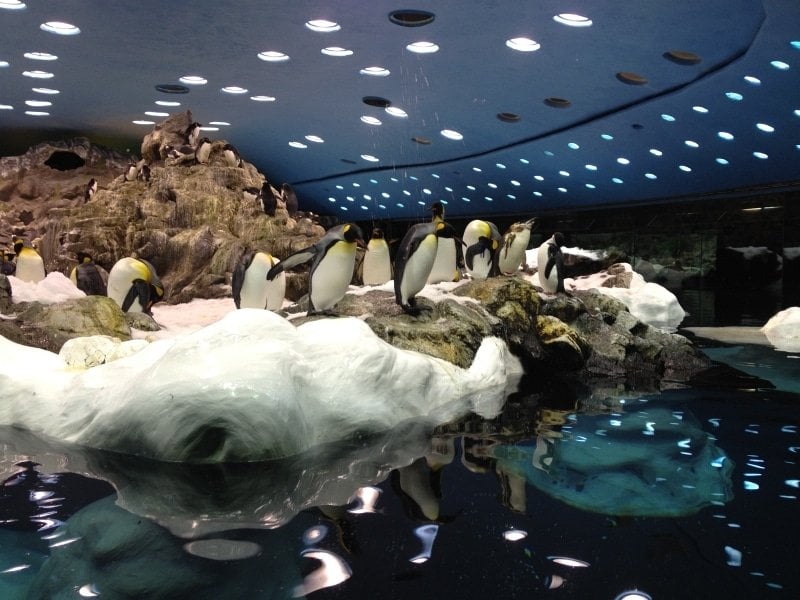
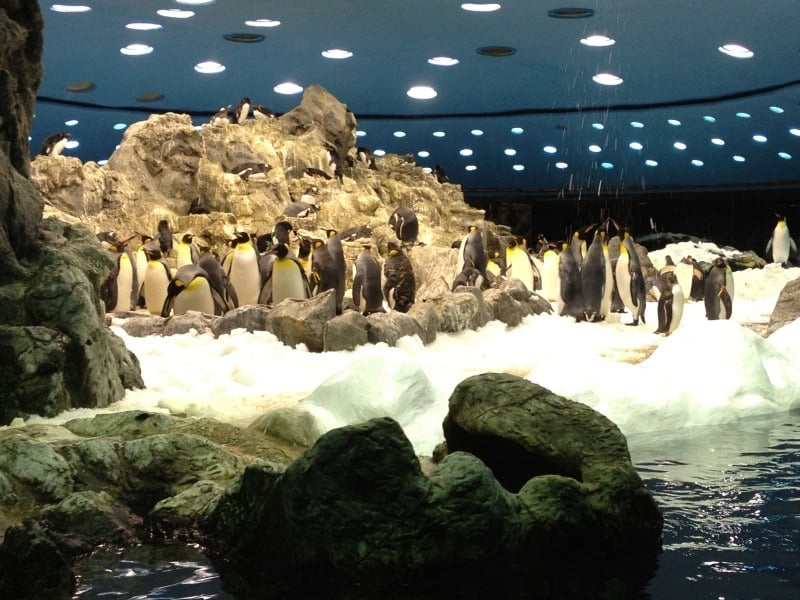
Loro Parque in Tenerife is home to 250 penguins. Five species of penguin are kept in the zoo’s Planet Penguin exhibit. Photo: Johannes Bornewasser
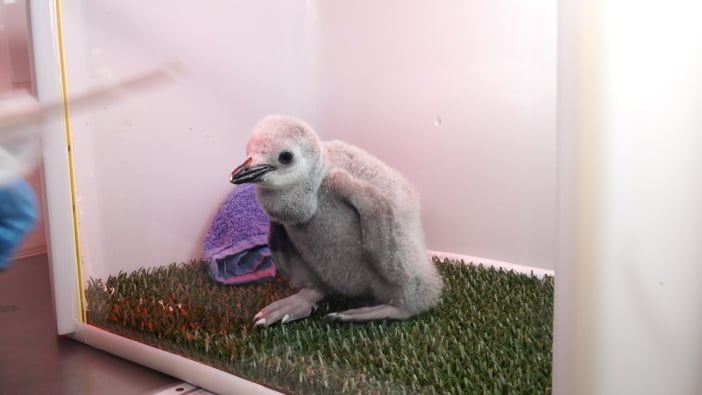
Planet Penguin is the name of the world’s largest penguinarium. Penguin Island at Loro Parque is housed in its own building in the heart of the zoo on Tenerife. Planet Penguin is home to around 250 penguins representing five different species.
Different climate zones for the penguins
The penguinarium is tailored to the different needs of the various penguin species. For example, in the wild, the Humboldt penguin lives in warmer regions than other species. At Loro Parque, the Humboldt penguins therefore have their own habitat, separate from the other species, maintained at a constant 21 degrees Celsius.
Loro Park on Tenerife is home to 250 penguins. Five species of penguin can be admired at Planet Penguin. Photo: Johannes Bornewasser
Around 50 nests and a landscape modelled on the natural habitat of Humboldt penguins in the Pacific are intended to replicate the animals‘ more tropical home as closely as possible.
Visitors walk through a large ice tunnel
Other penguin species, by contrast, prefer it to be significantly cooler: to cater for these animals as well, an ice tunnel has been built at Loro Parque to separate the different climate zones of the penguinarium. Visitors to the park are guided through the tunnel and suddenly find themselves in an environment inhabited by emperor penguins, rockhopper penguins, gentoo penguins and chinstrap penguins. These species live in the Atlantic region and prefer icy temperatures.
Constant fresh snow and a huge iceberg make the surroundings appear as realistic as possible for the animals. To maintain this habitat, Loro Park’s snow cannons produce around twelve tonnes of snow every day.
Twelve tonnes of snow are produced every day to provide the penguins with a species-appropriate environment. Photo: Johannes Bornewasser
Spectators on a conveyor belt
At first glance, it may not be entirely clear at Planet Penguin whether it is the visitors who are watching the penguins or the other way round: after all, visitors are channelled past the glass fronts of the penguin enclosures on large moving walkways. In this way, the park caters for the crowds of visitors who want to catch a glimpse of the lively animals every day.
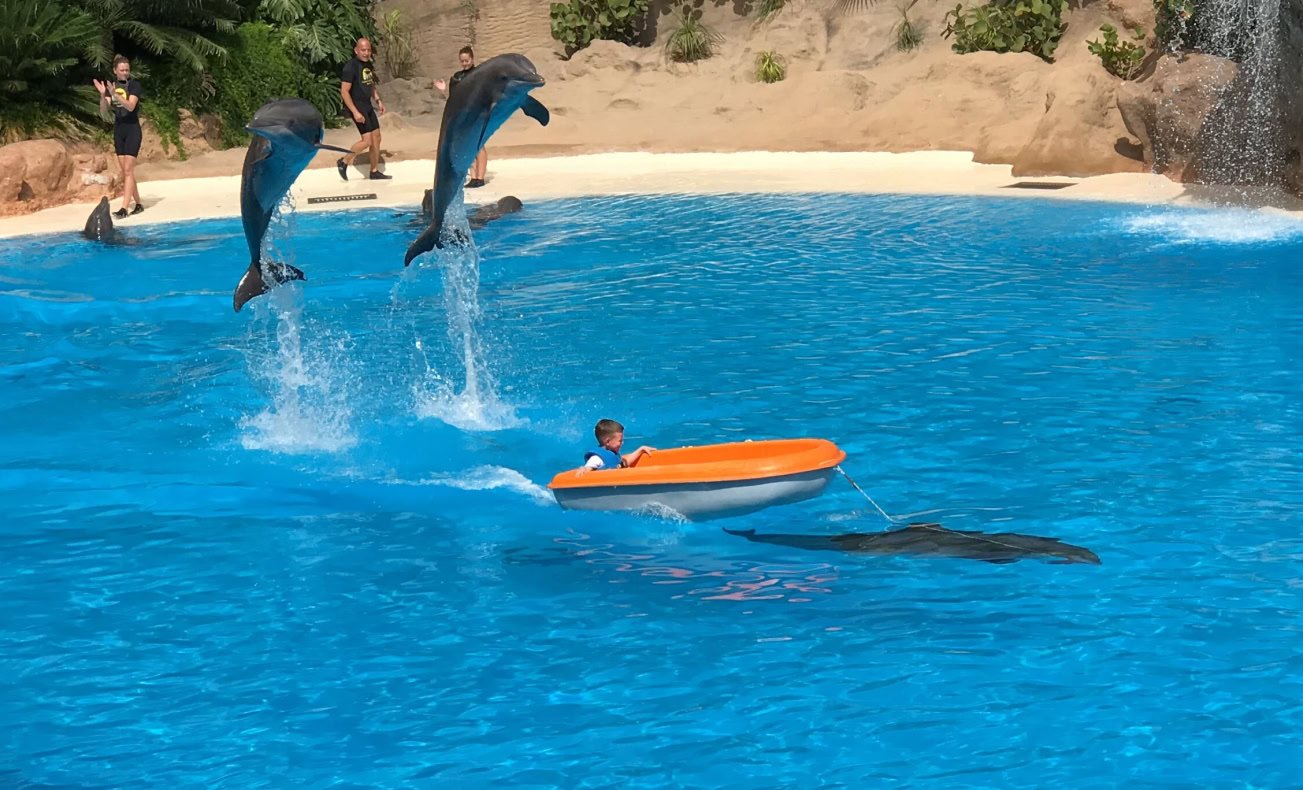
The dolphin show is one of the visitors‘ favourite attractions. Photo: Loro Parque
One of the main attractions at Loro Parque on Tenerife is the dolphin show. The park’s dolphinarium can accommodate up to 1,800 spectators who come to watch these clever marine mammals. In Europe’s largest dolphin pool – filled with 7,000 cubic metres of seawater – these intelligent animals perform their tricks, with children in the spectator area also being allowed to take an active part.
In the covered grandstand, visitors can sit back and relax whilst enjoying the dolphin show featuring these animals, which originally hail from Florida. During the show, which lasts around twenty minutes, the dolphins perform a veritable feast of tricks: they jump through hoops, balance balls, fling their trainers through hoops suspended in the air, and can even find their way around whilst blindfolded.
What’s more, at every show, one child is allowed to sit in a small boat and be pulled around the pool. And as a reward for the young captain, there’s even a little surprise at the end.
A young visitor enjoys being pulled through the pool in a boat by the lively animals during the show. Photo: Loro Parque
Refuge areas for the dolphins
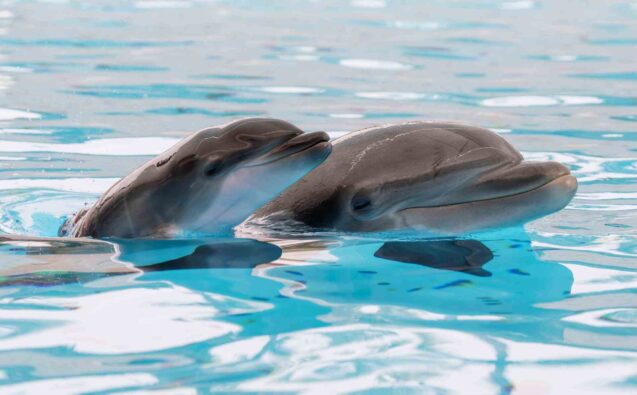
The dolphinarium is connected to the dolphins‘ retreat pools via an underground channel. This area, which is not accessible to spectators, is intended to give the animals the chance to recover from the exertions of their performances away from the hustle and bustle. The fact that the dolphins are now regularly having offspring shows that this approach is working. According to experts, this suggests that the animals are thriving.
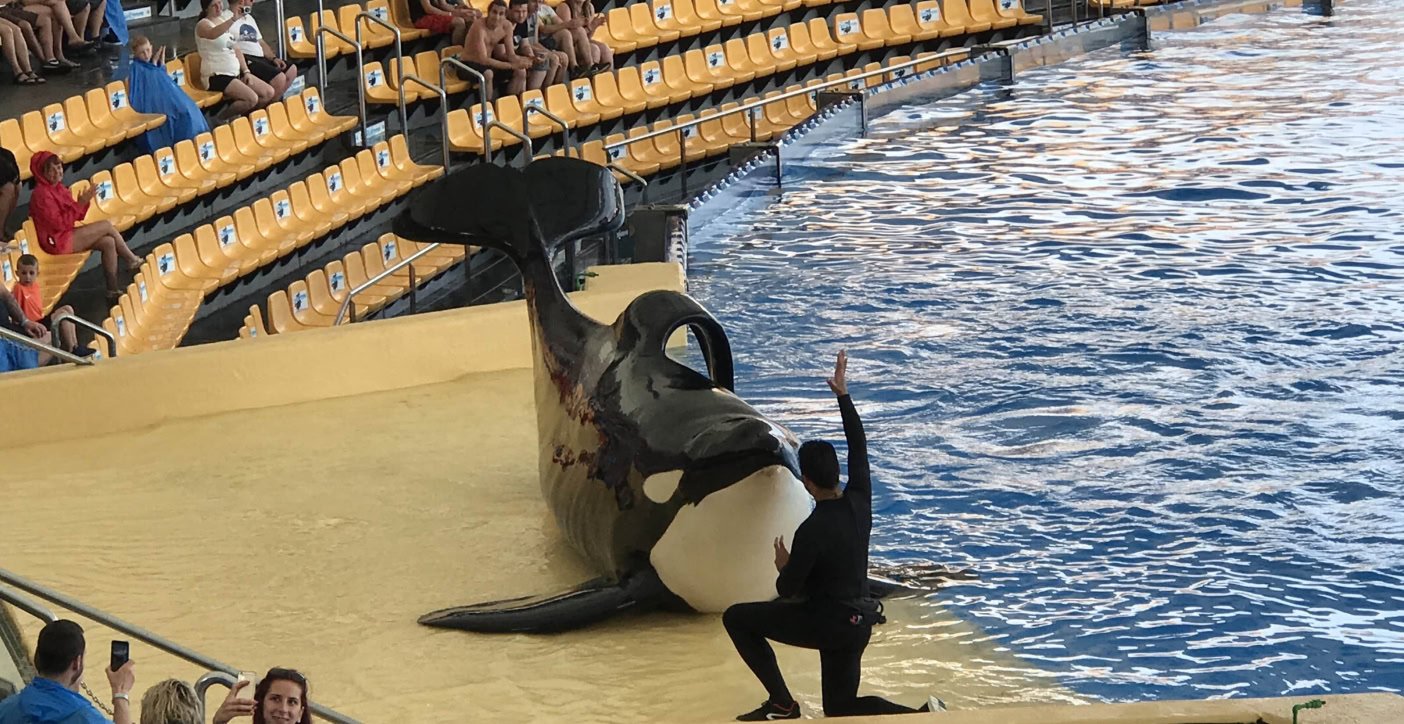
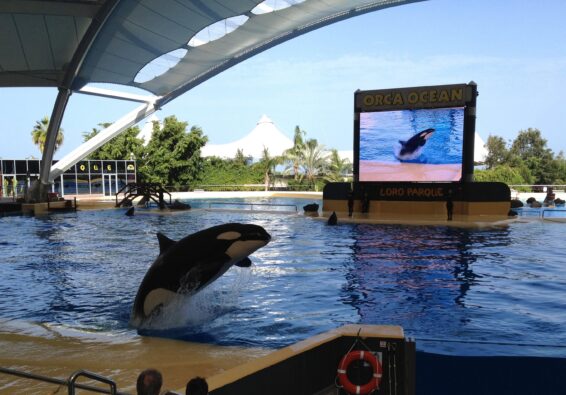
Photo: Johannes BornewasserThe orcas at Loro Parque are both loved and feared. In this trick, the trainer and the whale get very close. Photo: Johannes Bornewasser
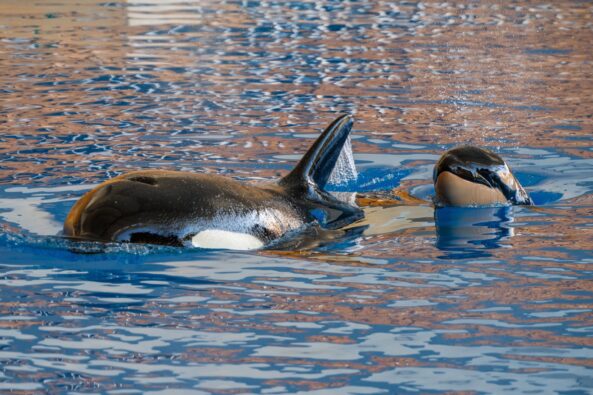
Orca Ocean can accommodate six whales. The orcas perform their tricks in a sort of amphitheatre. Loro Parque has been home to orcas since 2006. They have now even been incorporated into the zoo’s logo as its symbol. Orca Ocean was built in collaboration with ‚Sea World‘.
The whales are between one and 14 years old. They live in a tank measuring 8 or 12.50 by 120 metres, which holds around 22.5 million litres of water. The water is pumped directly into the tank from a depth of 65 metres in the Atlantic Ocean. The whales eat around 250 kilograms of fish per day.
Loro Parque sends its staff to the USA for training in breeding and training. This is to ensure the welfare of Keto, Tekoa, Kohana and Adan. Adan was born at Loro Parque in October 2010. This makes him the first orca calf to be born on the European continent.
Three orca shows a day
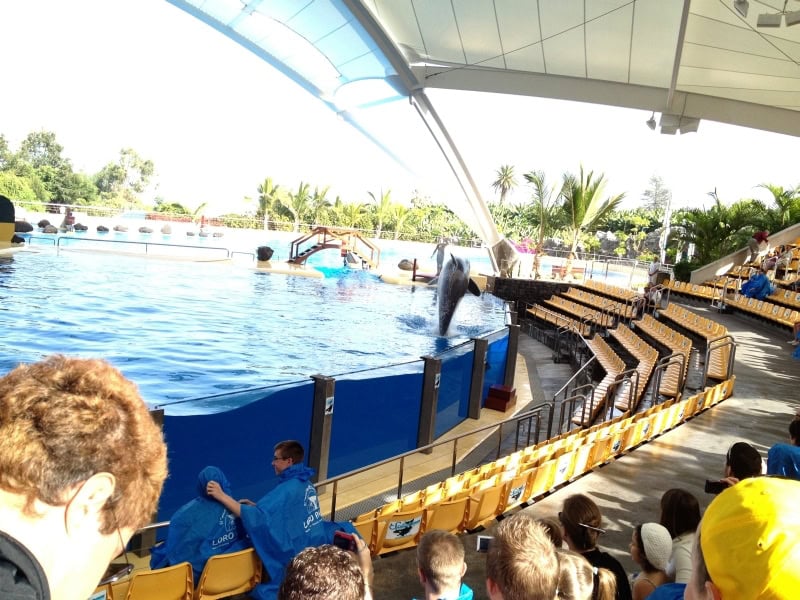
The orcas showcase their skills in three shows a day. You can find the opening hours for Orca Ocean here. We recommend arriving in good time, as the seats at the back, at least, fill up quickly. In the front section, however, there are usually one or two seats left free. This area is marked as the «Splash Area». The reason for this is the interaction between the orcas‘ prominent dorsal fins and the water’s surface.
A view of the audience area at the Orca Ocean show in Loro Parque, Tenerife. Photo: Johannes Bornewasser
News from the ‚Orca Ocean‘ at Loro Park has already made headlines around the world on two occasions. You can find out more here.
The sea lions are on the loose
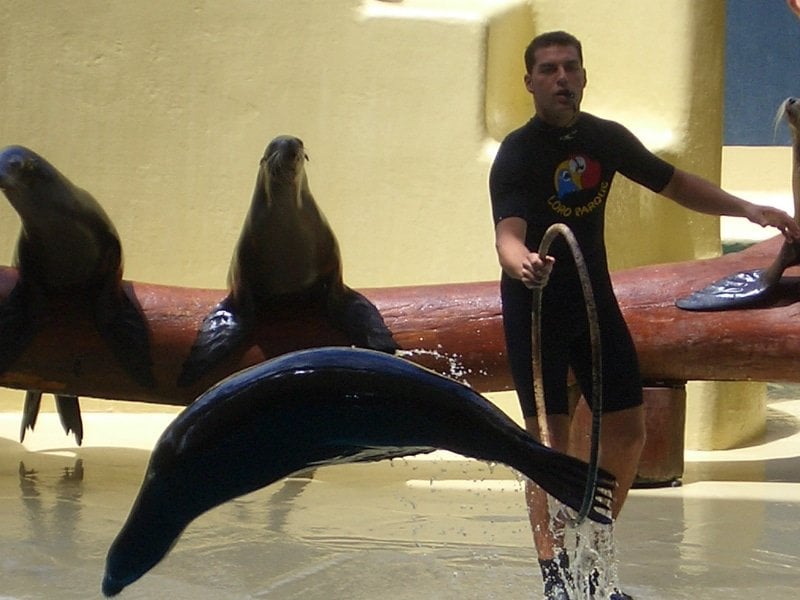
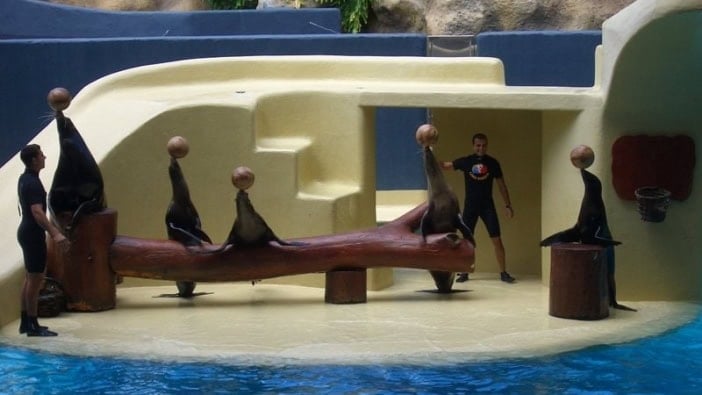
The sea lions are just as much a part of the park as the hundreds of parrots. They have a brilliant time working with their keepers. Photo: Johannes Bornewasser
The sea lion show at Loro Parque in Tenerife is one of the finest sea lion shows in the world. The animals are incredibly intelligent and their tricks delight not only children. The sea lion theatre at Loro Parque was refurbished by mid-December 2011 and has been looking better than ever ever since. The spectator stands are arranged in a semicircle around the large pool, ensuring that all visitors have a perfect view of the approximately 20-minute show.
In 1996, the first sea lion pup was born at Loro Parque. In 2002, that pup finally became a mother herself. There are now 23 sea lions living at Loro Parque, which has thus taken a leading role in Europe in the breeding of sea lions.
Sea lions live five times a day
Despite the wide range of shows and attractions, it is the sea lions in particular that win the hearts of most visitors to the zoo in the north of the island. Their playful nature, combined with their incredible agility, makes the show a real highlight of every visit to Loro Parque.
Photo: Johannes BornewasserThe sea lions at Loro Parque are not only excellent swimmers, but also outstanding performers. Photo: Johannes Bornewasser
At the start of the Loro Show, the parrots flutter through the visitor area before landing in their places. Photo: Johannes Bornewasser
The parrot show features what are perhaps the most intelligent inhabitants of Loro Parque. These animals are the park’s icons. They can count, drive a car or operate a drinks machine. All these tricks are performed several times a day in a 600-seat bird theatre, whose architecture is reminiscent of an Arab palace.
In the Loro Show, the birds are largely free to move about. They have their designated spots, to which they fly as soon as they are guided into the auditorium through specially designed passageways. Once there, the parrots and parakeets first circle directly above the audience’s heads before performing their tricks and aerobatic manoeuvres.
It’s particularly lovely that the children are involved not only in the Loro Show but also in other shows at Loro Park. They’re allowed to touch and stroke the animals, which helps them form a genuine bond with the parrots.
Photo: Johannes BornewasserAqua Viva, meaning ‚living water‘, is the name of the new underwater world at Loro Park. Photo: Johannes Bornewasser
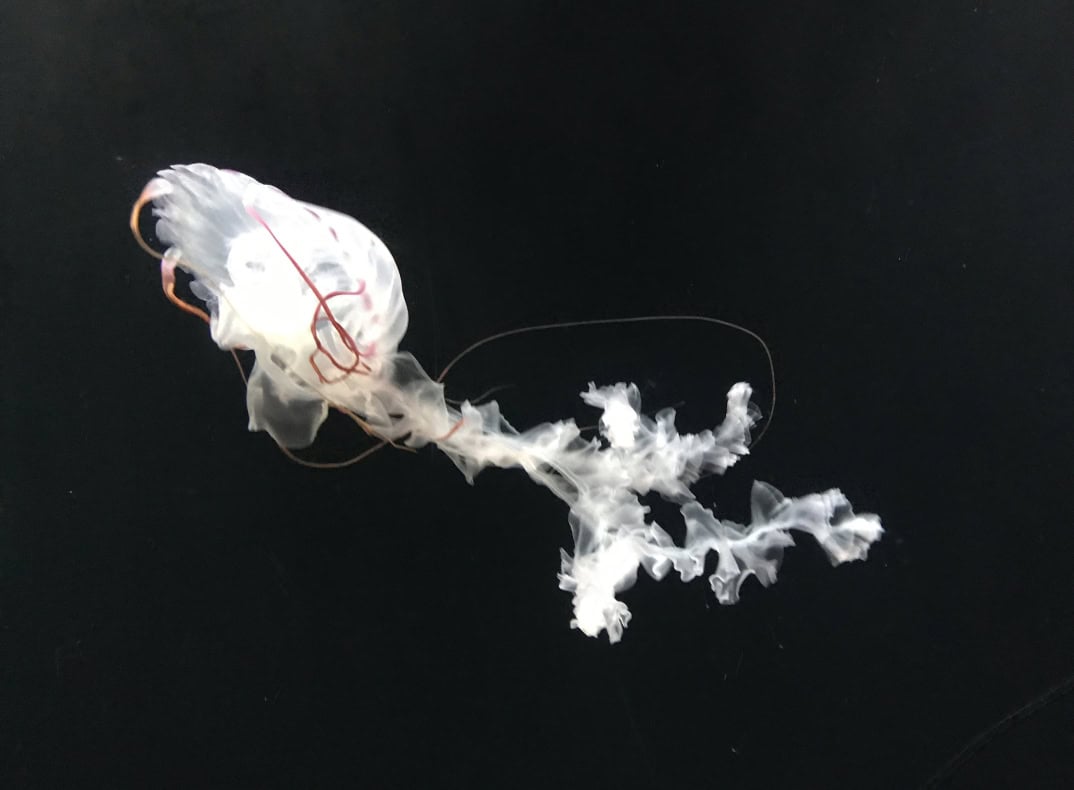
Underwater, they symbolise grace and timelessness; for beachgoers, however, they are a nightmare: Loro Parque in Tenerife has dedicated its newest area to jellyfish. Aqua Viva, meaning ‚living water‘, is designed to give visitors to the zoo in Puerto de la Cruz a closer look at the inhabitants of the ocean’s shallows.
500 square metres of underwater world
They glow in green, red and yellow. Perfectly staged, visitors to Loro Parque can now admire these creatures, which they would otherwise never see – or would only perceive as a nuisance on the sandy beach. Loro Parque has created an artificial underwater world covering an area of around 500 square metres.
100,000 litres of seawater are needed to keep the jellyfish happy. At the opening, the organisers explained that keeping these animals is very difficult, which is why they can only be seen in a handful of zoos around the world.
Aqua Viva: Jellyfish and the Sea at Loro Parque
But alongside the jellyfish – known as ‚medusas‘ in Spanish – there are other marine creatures to see as well. For example, reef sharks also swim through the new tanks at Loro Parque.
The opening in May 2014 was attended by various politicians, including the then President of the Canary Islands, Carlos Alonso, and his predecessor, Ricardo Melchior. The ceremony also featured a blessing from Archbishop Bernardo Álvarez.







«Loro Parque on Tenerife - all the information and tips»
No comments on this article yet.