

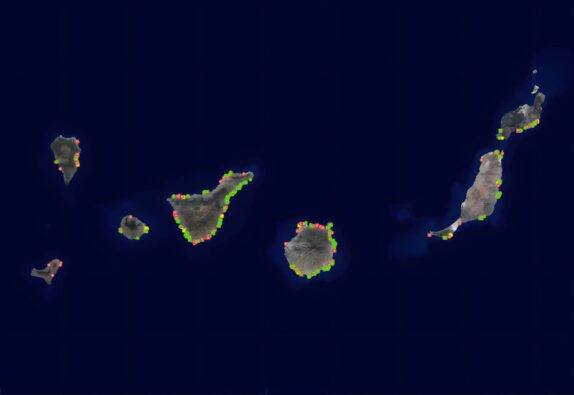
On Wednesday, the Canary Islands Air Quality Laboratory (AirCanLab) presented the results of a study carried out between 2024 and 2026 on air quality in the archipelago, which show that there is no pollution problem and that the limit values set out in the new European directive, due to come into force in 2030, are being met.
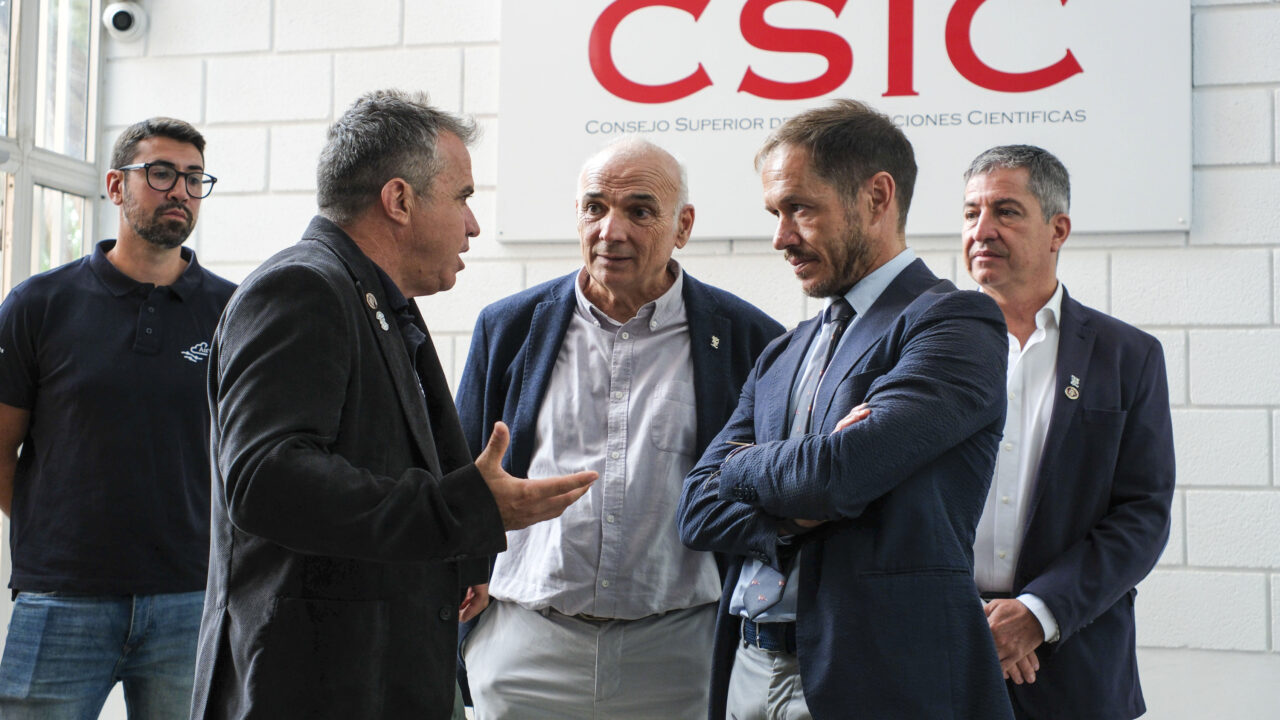
The announcement was made at the Institute of Natural Products and Agrobiology (IPNA), part of the Spanish National Research Council (CSIC), and was attended by the Regional Minister for Ecological Transition and Energy, Mariano Hernández Zapata, the CSIC’s representative in the Canary Islands, Manuel Nogales, and the lead researcher at AirCanLab, Sergio Rodríguez.
The work carried out by the centre over the last two years forms part of the first collaboration agreement signed between the scientific institution and the regional government, and has been based on measurements taken in various parts of the archipelago, which have made it possible to quantify how much of the ambient air pollution is local or regional in origin, and to identify the contributions from natural processes.
Canary Islands: Four sources account for PM10 pollution
Added to this is the ability to analyse the chemical composition of PM10 respirable particles, an analysis that complements the measurements taken at monitoring stations and which, thanks to the use of new tools, also makes it possible to measure the contribution of Saharan dust and distinguish it from pollution caused by industry, vehicles and ships.
In this regard, the researchers have explained that the particles analysed generally originate from four sources: local and regional vehicles in the Canary Islands, Saharan dust, sea salt and pollution from other regions, most of which is carried by the trade winds.
More specifically, the results show that when these winds are present, PM10 concentrations tend to range between 15 and 25 micrograms per cubic metre of air (based on 24-hour averages), with 70 per cent attributable to sea salt, 20 per cent to vehicle emissions on the islands and 10 per cent to cross-border pollution.
Saharan dust causes the highest PM10 concentrations
Furthermore, Saharan dust remains the «factor that contributes most to the deterioration in air quality», as it is the source that leads to the highest concentrations of PM10, which exceeded 100 micrograms per cubic metre during the study period.
The highest levels were recorded on 31 March 2026, at stations in the south of Tenerife and La Gomera, with levels close to 1,000 micrograms per cubic metre; whilst these represent high levels, they are far below the 1,800 recorded during the ’super calimas‘ that occurred between 2020 and 2023.
Another significant finding concerns pollution originating in North Africa, which is of industrial origin and linked to the production of fertilisers and coal-fired power stations in Morocco, as well as refineries, natural gas-fired power stations and fertiliser plants in Algeria, amongst other sources.
EU limit values from 2030 are considered achievable
With regard to the new European air quality directive, which entails a drastic reduction in permitted levels, data on chemical composition make it possible to quantify the contribution of different sources to PM10 levels, which are set at 20 micrograms per cubic metre as an annual average and 45 micrograms per cubic metre as a 24-hour average.
These limits mean that, in the case of emissions from the Canary Islands, they contribute just 2 micrograms per cubic metre to the annual average, whilst the contribution from sea salt, desert dust and cross-border pollution raises the annual average to between 30 and 35 micrograms; meanwhile, in terms of daily figures, all instances where limits are exceeded are due to natural sources of Saharan dust and sea salt.
«The Canary Islands will have no trouble complying with the new limit values set out in the European directive, which will come into force in 2030. What is certain, however, is that the Canary Islands government needs to put in place a series of tools to be able to distinguish between pollution originating in the Canary Islands and that which is carried in from elsewhere. And we are already working on developing these tools,» said Rodríguez.
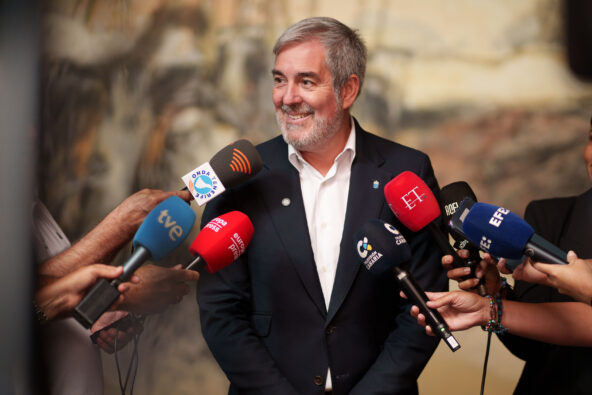
This has been confirmed by Zapata, who has stated that new measurement methods are already being implemented in preparation for the second collaboration agreement signed between the regional ministry and AirCanLab, which will run for four years and have a budget of 3 million euros.



«The Canary Islands expect the new EU air quality limits to be met»
No comments on this article yet.