


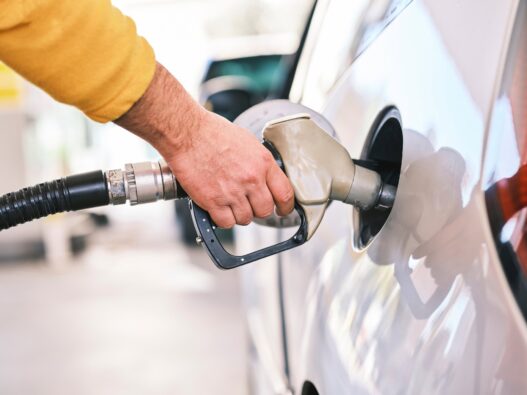
The economic situation is tense. And yet there is some good news regarding energy and price trends: in the Canary Islands, the petrol price has fallen over the past six weeks.
On average, it has become around seven euros cheaper to fill up a car. The price per litre of premium petrol in the Canary Islands has fallen by ten per cent since mid-June.
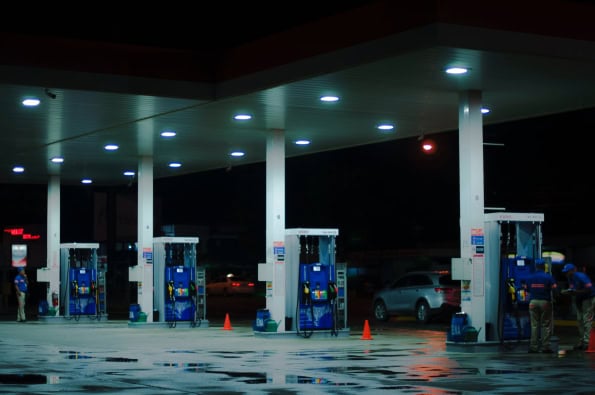
Petrol stations in the Canary Islands base their prices on the Petrolifera Canaria price index, or Pcan for short. These reference prices for petrol are not binding. However, most petrol station operators use them as the basis for their pricing policy.
Accordingly, a litre of premium petrol will cost 1.481 euros from Monday. In the first week of July, the price was still 1.586 euros. By mid-June, it had already reached 1.610 euros. Prices have been falling steadily ever since.
The price of the more expensive 98-octane Super Plus petrol, which is now sold under various names at many petrol stations, stands at 1.581 euros, compared with 1.690 euros at the start of June and 1.70 euros in mid-June.
Diesel is currently priced at 1.502 euros this week. At the start of June, a litre still cost 1.599 euros; two weeks later, it was 1.605 euros.
Fuel prices in the Canary Islands: filling up currently costs around 70 euros with the fuel discount
With an average tank capacity of 55 litres, a full tank of regular petrol currently costs 81.40 euros. Thanks to the fuel discount in Spain, which also applies in the Canary Islands, the price per litre of fuel is reduced by 20 cents.
All in all, this means that a full tank currently costs 70.40 euros. In mid-June, it would have been 88.50 euros without the discount and 77.50 euros with it. The situation is similar for diesel: the price has fallen from just over 88 euros (77 euros with the discount) to 82 euros (71 euros with the discount).
Petrol cheaper in the Canary Islands due to crude oil prices
The reason for the falling fuel prices lies in the price of crude oil. A barrel is currently cheaper on the international markets. And according to forecasts, this trend is set to continue for the time being.
The Organisation of the Petroleum Exporting Countries (OPEC) announced last week that it would increase production from September onwards. Even though this increase will be smaller than initially anticipated, an increase in supply will, in accordance with the laws of the market economy, lead to falling prices.
According to the PCAN, this measure is not solely, but is a major factor, responsible for the price reduction: «If the price of crude oil falls,» they said, «this has an impact on the price of fuel».
However, Pcan stated that the previous price rises had so far had little noticeable effect on consumption. It added that minor fluctuations had been observed, but that these were normal during the summer holiday period.
Filling up in the Canary Islands was significantly cheaper a year ago
Yet despite the current trend, filling up in the Canary Islands has, on balance, become significantly more expensive. Adjusted for the fuel discount, a full tank in the Canary Islands currently costs around 22 euros more than it did a year ago.
In August 2021, a litre of petrol cost 1.042 euros. A full tank therefore cost 57.31 euros. Super Plus was priced at 1.168 euros at the time – so a full tank cost 64 euros. A year ago, diesel was even below the one-euro mark, costing 0.972 euros per litre. A full tank therefore cost 53.46 euros.
Even though petrol prices are currently continuing to fall, they are unlikely to return to the levels seen a year ago any time soon. Nevertheless, the current trend is a welcome sign for many households in the Canary Islands who are struggling financially.

«Petrol prices fall in the Canary Islands - the experts' forecast»
No comments on this article yet.