


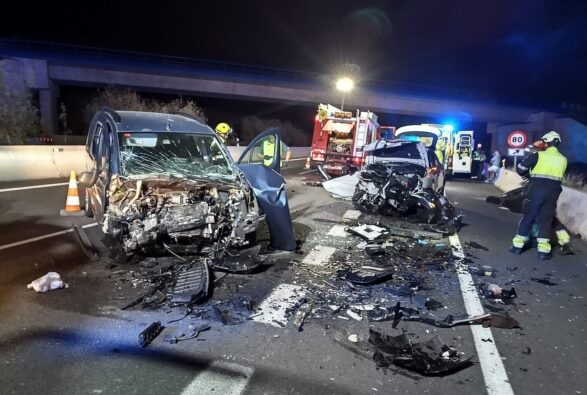
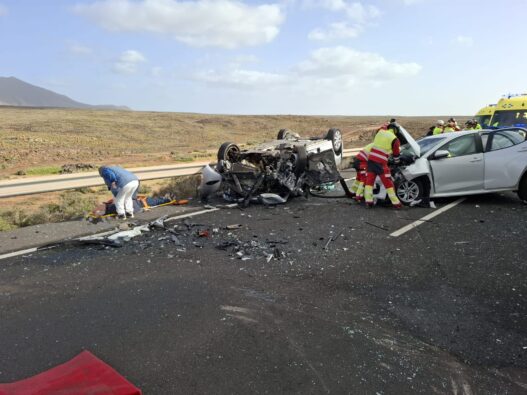
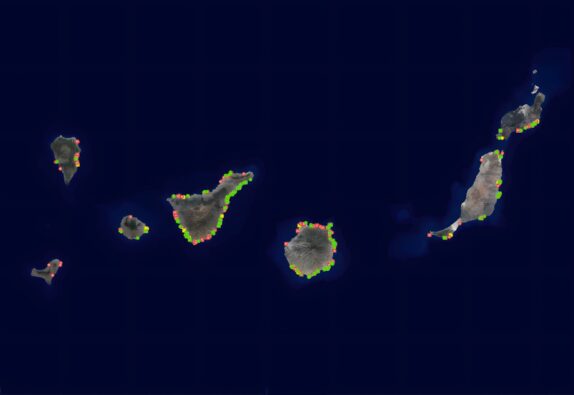
The number of road deaths on the Canary Islands‘ country roads has fallen more than three times as much as in the rest of Spain. According to data from the Spanish traffic authority DGT, 37 people died on the islands between 1 January and Monday, compared with 46 during the same period last year. This represents a fall of 19.6 per cent. Nationwide, the figure fell from 956 to 900 over the same period, a drop of around six per cent.
The figures are cumulative and relate exclusively to rural roads. Accidents in urban areas are not included in the statistics. The authorities count as road fatalities those people who die within 24 hours of an accident.
The number of fatal accidents also fell, from 44 to 35. More than half of this year’s fatalities occurred in the western province, which includes Tenerife.
Tenerife: The Western Province has recorded 22 road deaths on country roads
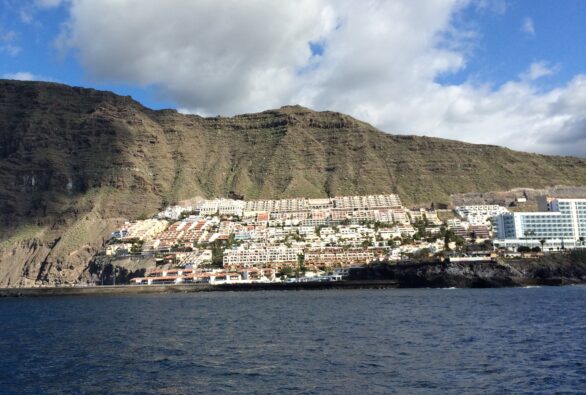
On Tenerife, La Palma, La Gomera and El Hierro, 22 people have lost their lives on rural roads since the start of the year, compared with 27 during the same period last year. This represents a fall of 18.5 per cent. The number of fatal accidents there fell from 25 to 21. An analysis published at the end of October for Tenerife alone had shown slightly fewer road deaths in Tenerife than in the previous year.
The sharpest decline, in percentage terms, was recorded on the eastern islands Gran Canaria, Lanzarote and Fuerteventura. Fifteen people died there, four fewer than in the same period last year – a fall of 21.1 per cent. The number of fatal accidents fell from 19 to 14. In both provinces, one more person died than there were fatal accidents.
This trend marks a reversal of a period during which there were more fatalities on the roads of the Canary Islands than at sea. However, some of the victims do not appear at all in the road accident statistics.
Urban traffic is not included in the rural roads figures
The annual report for 2024 published by the Canary Islands Statistical Office reveals the extent of this figure. It recorded 3,857 accidents involving casualties on all roads across the archipelago, in which 69 people died and 5,401 were injured. A third of the fatalities – 23 people – occurred in urban traffic, whilst 46 died on rural roads.
New traffic regulations to protect pedestrians and cyclists have been in force in the Canary Islands since 1 October. According to traffic counts carried out by the Tenerife Island Council, the automatic monitoring stations recorded an average of around 1.58 million vehicle movements per day on the island in September, with heavy goods vehicles accounting for 4.6 per cent of the total. The busiest monitoring point was Padre Anchieta, with an average of 115,000 vehicles per day.



Comments (0)
No comments on this article yet.