


On Wednesday, the Canary Islands Government and the islands‘ two public universities signed a «landmark and historic» funding plan worth 1,346 million euros for the period 2027-2030, the first financial stability measure for both institutions in 18 years.
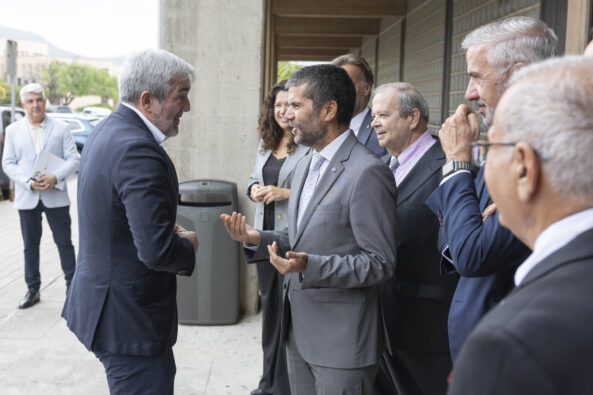
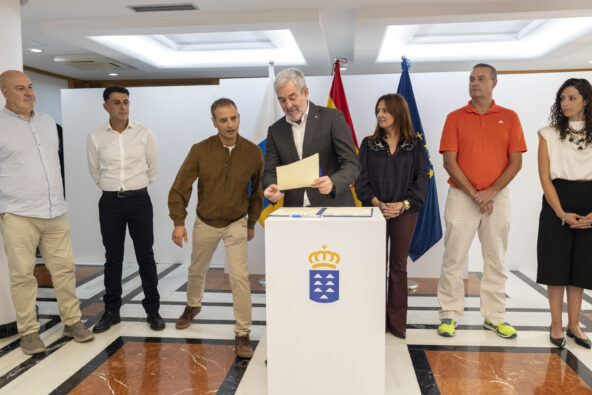
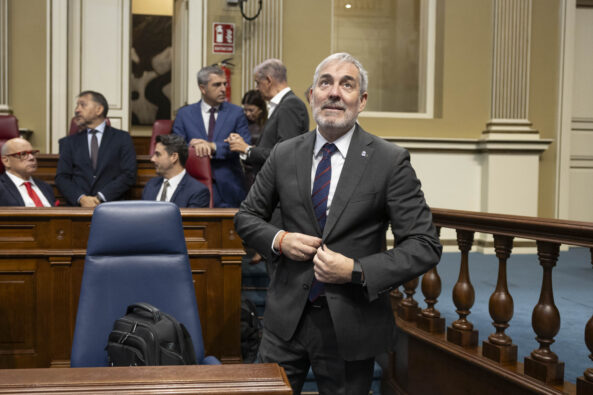
The plan was signed in Parliament by the President of the Canary Islands, Fernando Clavijo; the Regional Minister for Universities, Migdalia Machín; the Vice-Chancellors of the University of La Laguna, Francisco García, and the University of Las Palmas de Gran Canaria, Lluís Serra; and the chairpersons of the social councils of both institutions.
The Vice-Chancellor of the ULPGC, Lluís Serra, has stated that today is a day «to celebrate» after three «long» years of work on the document, which at times has felt like «a rollercoaster ride», but which has finally succeeded in bringing stability to public universities, which will now be able to devote more time «to what we do best».
Universities in the Canary Islands: Student accommodation remains a pressing issue
Serra has emphasised, however, that there is still room for improvement and, in this regard, has highlighted the urgent need to provide «immediate» university accommodation for students, for which the Canary Islands Development Fund (Fdcan) could be utilised via the island councils.
On this point, the Regional Minister for Universities, Migdalia Machín, has clarified that the island councils will be able to use the Fdcan to acquire land and buildings for university accommodation, as well as to draw up a 10-year plan in this area.
Universities link their financial plans to accountability and a social pact
Lluís Serra expressed particular gratitude to the President of the Canary Islands for making «the final push» needed to bring the agreement to fruition, and pointed out that today is also a day of commitment for the universities, which are required to make an extra effort to implement this plan, which, he reiterated, they never viewed «as a blank cheque».
For his part, the Vice-Chancellor of the ULL, Francisco García, has stated that, with this funding mechanism, universities are taking «a momentous and historic step» towards greater financial security and predictability, as well as greater equity.
García pointed out that the previous agreement was signed for the period 2009-2013 and was not fulfilled almost from the outset due to the financial crisis; he also considered that the agreement signed today is «a step in the right direction» towards his proposal to forge a broad social pact for public universities in the Canary Islands, one that extends «beyond» electoral cycles.
He went on to say that it also represents a historic sign of unity between the archipelago’s two higher education institutions and the parliamentary spectrum as a whole, which, in his view, reinforces the idea expressed by the poet Pedro García Cabrera that «hope sustains us».
Canary Islands Government: Clavijo praises the rectors' patience
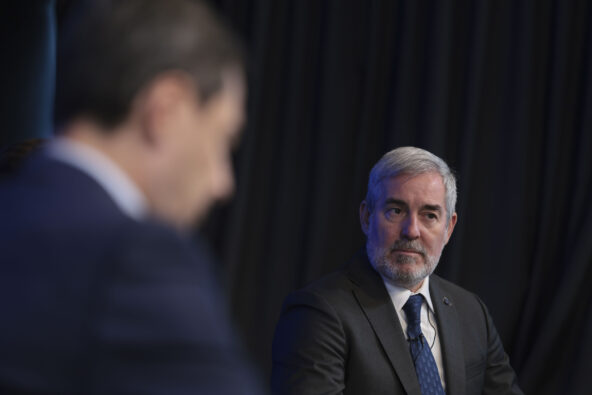
The President of the Canary Islands, Fernando Clavijo, has pointed out that today is not «the end of anything, but the beginning of a period of calm» for public universities, and has commented that both vice-chancellors have had to endure «internal pressure» in the face of «scepticism, despair and warnings within their institutions that they were being misled».
«But they have been ‚patient and demanding‘,» continued Clavijo, who remarked that whilst leading a government is complicated, «I wouldn’t want to be in charge of running a university», but the vice-chancellors have managed to «steer the ship firmly».
Funding plan: Final gaps and targets remain to be determined
The regional minister responsible for the area, Migdalia Machín, has welcomed the agreement to provide universities with the necessary stability following negotiations in which, she noted, she never wanted vice-chancellors «to just go along with me, but rather to press their demands», before going on to express her gratitude for «the rapport» with the university teams.
There are now a few «loose ends» to tie up in order to finalise the funding plan, which consists of two parts: a «basic» component covering the universities‘ operating costs, and a second, target-based phase aimed at reducing student drop-out rates, increasing the number of dual degrees and expanding the range of courses on offer in line with economic demand, amongst other things.





Comments (0)
No comments on this article yet.