

The postal service on Tenerife has been operating under constant strain for months. Sorting centres are overflowing, postmen are under pressure, and yet the official postal service remains the only one that has so far fulfilled its remit reliably: parcels are actually being delivered. Delays are common, but deliveries do go ahead.
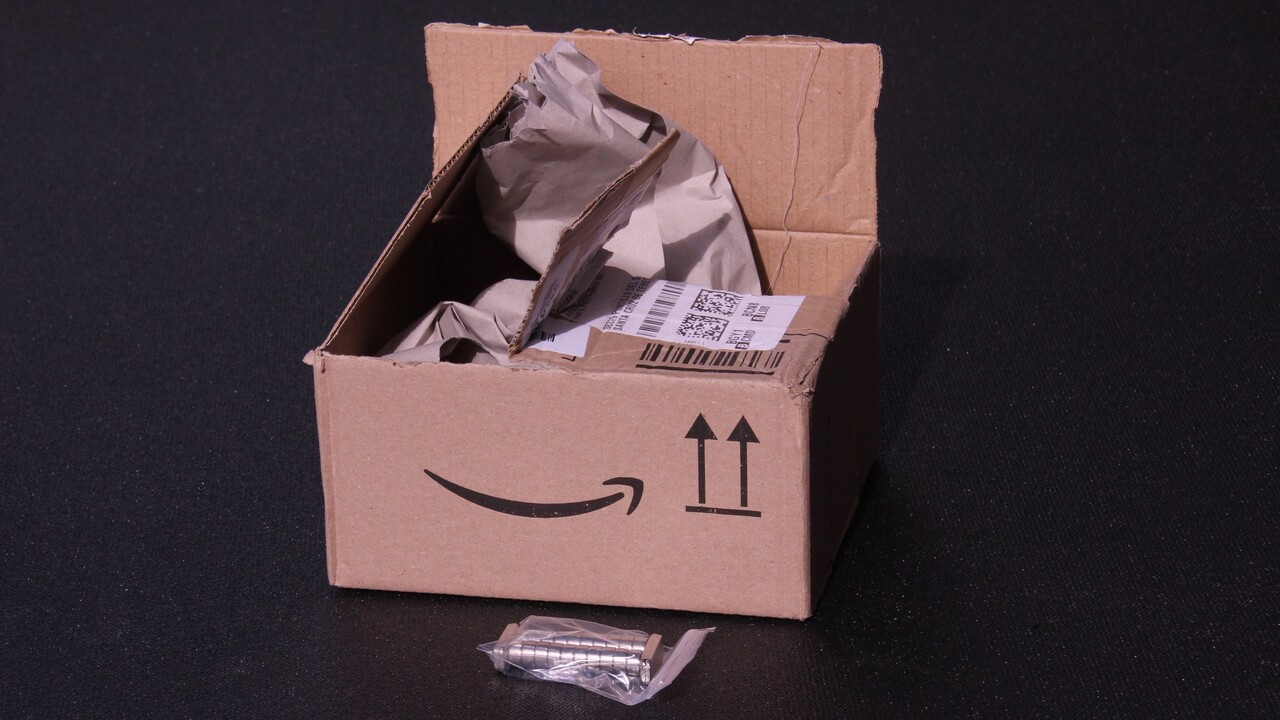
At the same time, the environmental impact of online retail is growing. One example illustrates the scale of the problem: an item measuring 6 × 2.5 × 1 centimetre – that is, 15 cubic centimetres and roughly the size of a USB stick – was dispatched in a cardboard box measuring 20 × 16 × 10 centimetres. That equates to 3,200 cubic centimetres. The cardboard box was therefore 213 times larger than its contents, with a fill rate of 0.47 per cent.
For an island with limited transport capacity, this is more than just inefficient. Oversized packaging takes up space in containers, air freight and delivery vehicles. This is space that is then unavailable for shipments that are actually needed.
Spain’s postal service is operating at full capacity in the Canary Islands
Whilst Correos continues to deliver despite these structural challenges, private parcel services paint a different picture. One provider apparently refuses to make doorstep deliveries as a matter of principle and directs customers straight to collection points located some distance away. Another reported at 2.03 pm that a delivery attempt would be made at 2.49 pm – in other words, a delivery attempt that was scheduled for a time in the future. The fact that the recipient was actually at home was irrelevant.
Undelivered parcels are returned to the sender after a short time. This results in a second journey that could be entirely avoided, involving further freight volume and additional, unnecessary CO₂ emissions. Failed deliveries – or those where no attempt was even made – therefore place a strain not only on the local infrastructure but also on the environment.
Fictitious delivery attempts in the Canary Islands
The problems with island logistics do not arise solely in the Canary Islands, but primarily where decisions regarding packaging and delivery are made. When a small item is dispatched in large boxes and private parcel services fabricate delivery attempts, this is not a marginal phenomenon, but a structural shortcoming.
Whilst the public postal service continues to deliver despite being overburdened, other providers generate unnecessary journeys, returns and, consequently, avoidable emissions. The island bears the brunt of processes that are designed for efficiency but, in practice, waste space, time and resources.
«How private parcel delivery services are failing in the Canary Islands»
No comments on this article yet.