

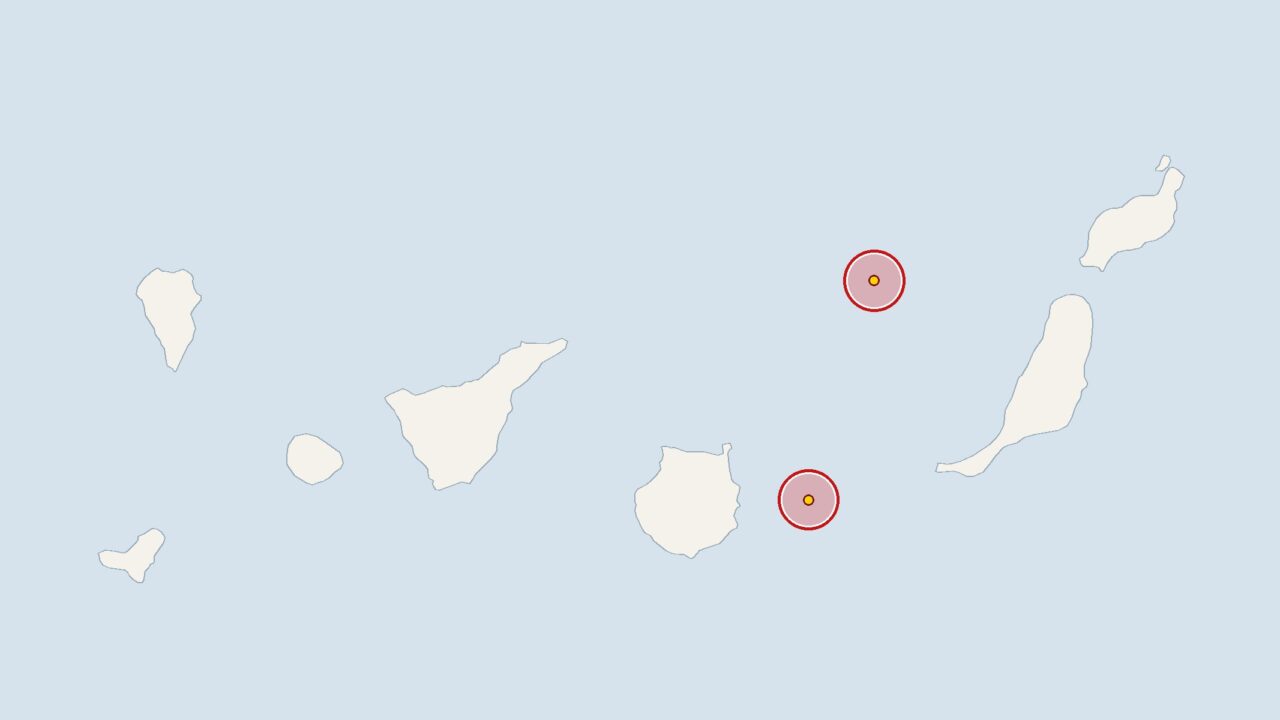
On Sunday, two earthquakes with a magnitude of up to 2.7 occurred off the Canary Islands within a few hours of each other. The stronger of the two quakes was recorded by monitoring stations at 4.36 am, around 70 kilometres off Fuerteventura. Its epicentre was at a depth of 31 kilometres, and its magnitude was 2.7.
Both tremors were recorded by the Spanish National Geographic Institute (IGN). The second tremor occurred early on Sunday morning off the coast of Gran Canaria.
According to the IGN’s records, there have been 51 earthquakes in the region over the past 30 days, which equates to an average of 1.7 per day. Twelve tremors, with an average magnitude of 1.9, occurred over the past seven days.
Canary Islands: Earthquake activity remains within normal limits
The second earthquake on Sunday occurred around 30 kilometres off the coast of Gran Canaria. It was recorded at 6.51 am local time at a depth of 16 kilometres. The magnitude was 2.6.
Whilst the IGN records the tremors, the Euro-Mediterranean Seismological Centre analyses the data. According to the IGN, the number of earthquakes over the past seven days has been within the usual range.
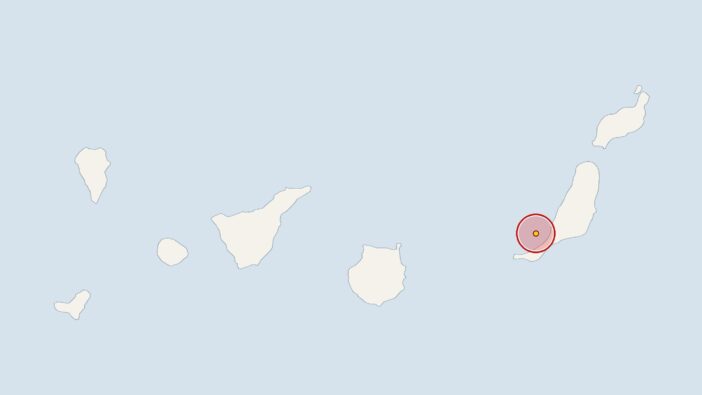
Prior to this, the IGN had most recently reported three earthquakes in the Canary Islands region. On Friday at 9.50 pm, the earth trembled around 30 kilometres off Gran Canaria with a magnitude of 2.0 at a depth of seven kilometres. Earlier that morning at 6.38 am, an earthquake near El Hierro, also with a magnitude of 2.0; its epicentre was 28 kilometres deep. On 17 October at 6.11 am, the monitoring stations also recorded an earthquake off the coast of Tenerife with a magnitude of 2.2 at a depth of five kilometres.
Earthquake activity such as this is considered normal in the Canary Islands. The archipelago consists of many volcanoes, some of which are still active. As long as the activity does not occur in swarms, earthquakes off and beneath the Canary Islands are therefore considered entirely normal.







Comments (0)
No comments on this article yet.