

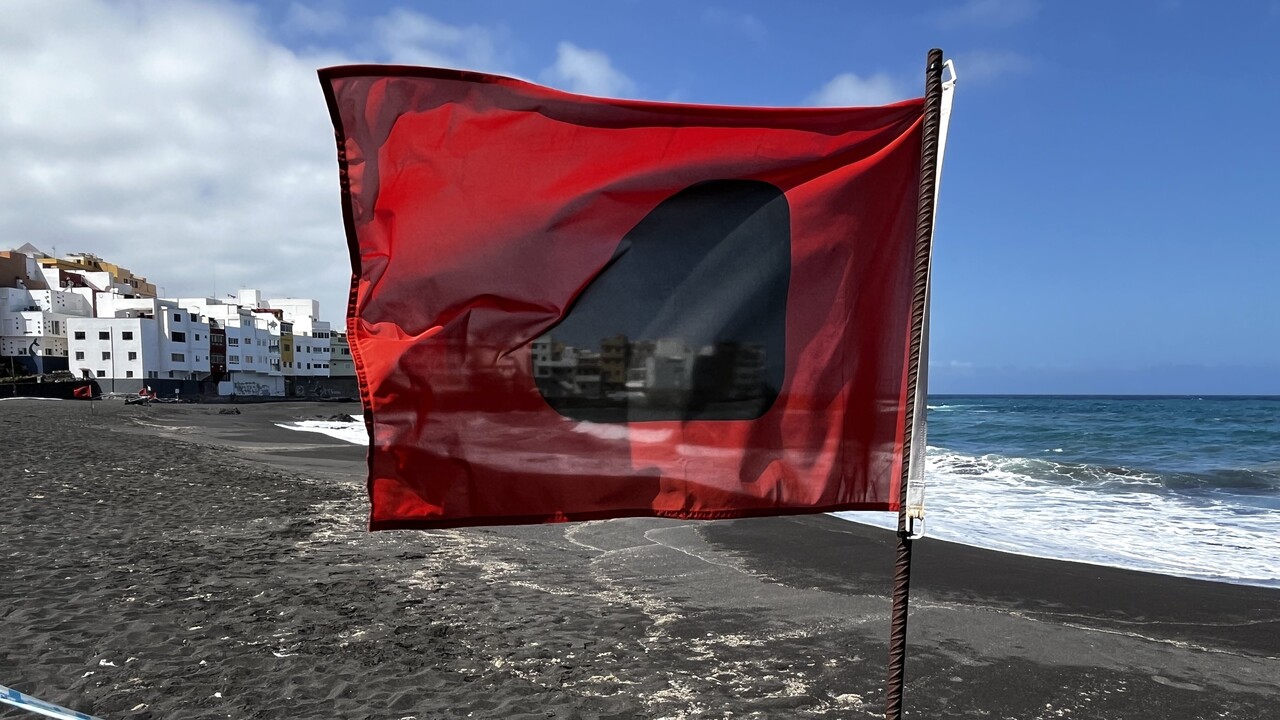
The Tenerife Island Council is allocating more than 70 million euros for the expansion of the sewerage system. This is in response to the ongoing sewage problems at various beaches on the largest of the Canary Islands. More than half of these funds come from the local authority cooperation plans, which run until 2031. Every year, more than 62.5 million cubic metres of partially treated or untreated sewage flows into the sea and into the groundwater of Tenerife.
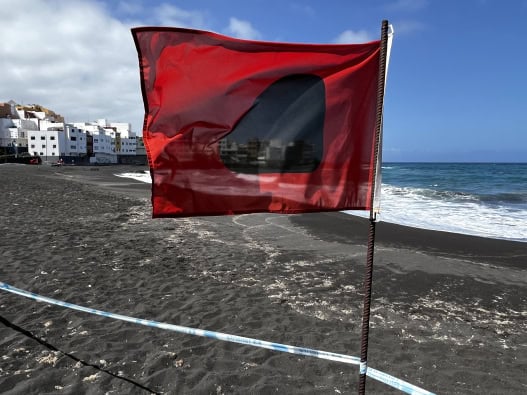
The historical failings regarding sewage on Tenerife were particularly evident at Playa Jardín. The most popular beach in the north of Tenerife was closed off for almost a year. Persistently poor water quality led to investigations which revealed that dozens of residential properties near the beach had never been connected to the public sewerage network.
This problem exists in several parts of Tenerife. Consequently, the Island Council took charge of the matter. It justified its intervention by citing the failings of the local councils, which had been responsible for the issue but had failed to take action. As a result, local politicians now face legal proceedings:
Tenerife: 70 million euros to tackle sewage in the sea
«You can’t see underground construction work; it doesn’t win votes and, what’s more, it causes a nuisance,» said Juan Rumeu, president of the environmental advisers on Tenerife. That is why the issue had never been tackled consistently. Coupled with high tourist numbers, the sewage problems then gradually became more apparent: a tourism interest group in the Canary Islands had counted around 22 million visitors to the Canary Islands in 2024, rather than the official figure of 18 million and saw this as one of the causes of the high levels of sewage in the sea.
Between 2019 and 2023, the Canary Islands Government paid 8.2 million euros in fines to the European Union for breaches relating to wastewater treatment. Tenerife’s Environment Minister, Blanca Pérez, expects further sanctions unless fundamental solutions are found.
Four local politicians in court over discharges in the Valle de Güímar
All of this is now set to be dealt with through the courts. From February, the mayors María Concepción Brito of Candelaria and Carmen Luisa Castro of Güímar, as well as the former mayors José Gumersindo García of Candelaria and José Juan Lemes of Arafo, will have to answer to the court. Among other things, the case concerns environmental offences: untreated wastewater flowed from the Polígono Industrial del Valle de Güímar industrial estate into the sea. The court is now to determine whether the mayors were aware of this and should have intervened.
In addition, the judicial authorities are investigating Minister Pérez, the former mayor of Puerto de la Cruz, Marco González, and Javier Davara, the managing director of the island’s water authority, in connection with alleged environmental offences.
The district sewage treatment plant in the Valle de Güímar cost 14 million euros and came into operation last year following the incident in the industrial estate. Two new large-scale plants in Granadilla de Abona and Guía de Isora have given Tenerife the highest sewage treatment capacity in its history this year. Whilst the maximum capacity in 2019 was 25 million cubic metres – representing 40 per cent of the annual volume – this year’s figure stood at more than 35 million cubic metres, accounting for more than half. The local authorities are currently spending 230 million euros on building the Montaña Reverón plant in Arona and expanding the Buenos Aires plant in Santa Cruz.
Tenerife: Only 59 out of 180 discharge points into the sea are authorised
The latest count recorded 180 discharge points into the sea. This means that two out of three sewage discharges are operating without the required authorisation. Rumeu therefore considers even the earmarked 70 million euros to be insufficient. The expert referred to a report by the Island Council from the previous legislative term, which estimated the investment required for the sewerage networks at more than 500 million euros. In his view, in some municipalities more than half of the homes are still not correctly connected to the sewerage networks.
Playa Jardín in Puerto de la Cruz was closed to bathers for just under a year. This was due to high levels of faecal bacteria. The incident made international headlines and ultimately raised political awareness of the ongoing sewage challenges on Tenerife.
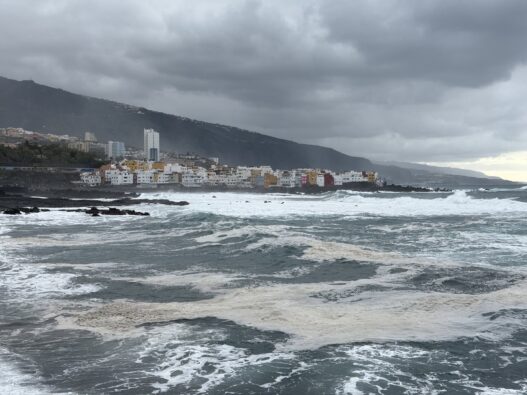
Most recently, in August, a two-day ban on swimming was once again imposed on the main beach at Puerto de la Cruz. In addition, local residents report a persistent foul odour near Playa Jardín. In the neighbouring town of Los Realejos, which borders it directly, a district sewage treatment plant that has been obsolete for years is still in operation. A breach in the sewage outfall is causing contaminated wastewater to be discharged near the beach, rather than just under a kilometre off the coast as originally planned.
In 2024, the year of the prolonged closure, 125 of the 450 residential properties in Punta Brava were not connected to the Puerto de la Cruz sewerage network. This meant that untreated sewage from these buildings was also flowing into the sea. According to the Puerto de la Cruz local authority, it is working on a solution. In the meantime, work on the pipe remains on hold.


Comments (0)
No comments on this article yet.