

At the corner of Nuñez de la Peña and Baltasar Nuñez streets, there’s a smell of fresh bread. A few metres further on, the scent is reminiscent of malt sweets. A little further still, and you find yourself standing in front of an open door. The aroma comes from the Gofio mill, La Molineta, in La Laguna. San Cristóbal de La Laguna, as the town is officially known, is the cultural heart of Tenerife, home to the island’s university and a UNESCO World Heritage Site.
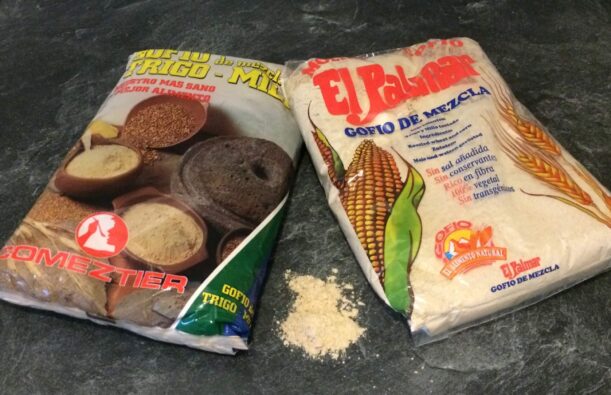
José Luis García, a fifth-generation miller, makes it clear: «Gofio is not flour.» Only a clueless mainland European would be tempted to make such a comparison. And what is gofio? «A wholesome, vitamin-rich food,» says García.
Gofio: a ubiquitous powder in the Canary Islands
Viewed objectively, it consists of roasted and subsequently ground cereals, primarily wheat, maize and barley. But combinations with rice, chickpeas, millet and oats also exist. It is the only foodstuff that has survived from the time of the original Canarian population right up to the present day. In local cuisine, the powder is ubiquitous: it is used as baby food, a breakfast drink, a energy-boosting food for sportspeople, an addition to soups, or it is used to make desserts.
Around five million holidaymakers fly to Tenerife every year. Yet only a few are keen to discover gofio and the island’s other specialities: the unique potato varieties, the honeys, the delicious tomatoes and bananas, handmade cheeses, or the characterful wines. Although there are exceptions, international cuisine dominates in the tourist centres on the south coast and in Puerto de la Cruz. Anyone who limits themselves to fast food and hotel buffets there is missing out on one of the island’s greatest attractions: its cuisine.
The best place to learn about winegrowing is the Hacienda La Barranda. From its picturesque walls, you can look down to the Atlantic Ocean and up to Mount Teide, Spain’s highest mountain at 3,714 metres. There, you can learn about the labour-intensive methods of cultivation. You’ll also discover that varieties thought to have been lost – such as Gual, Tintilla and Castellana, which were brought over by the Spanish conquistadors in the 16th century – are now being cultivated once again.
Honey and wine in Canary Islands cuisine
José Alfonso González is the director. In his view, it is «the mineral-rich lava soils, the vines and the Atlantic climate» that give the wine its character. To get a taste of what he’s talking about, the best thing to do is take part in a wine tasting.
Right next to the Casa del Vino is the Casa de la Miel. The honey house has an information centre. For Antonio Benanbol, the centre’s director, «these honeys are unique in the world. Almost half of all the varieties bloom only here.» In fact, one could take a flavour tour of the island based solely on the honeys, tasting them according to the seasons, compass direction and altitude. Where else can you find naturally pure single-flower honeys such as mint, fennel, agave, broom or Retama del Mount Teide, a plant that grows only in Mount Teide National Park?
Jesus González is one of the chefs who has been working for years to adapt Canary Islands cuisine to sophisticated gastronomy. The new cuisine is lighter and more refined than its traditional predecessor. For the rabbit dish, González uses only the meat, stuffs it with young vegetables and serves it with a mushroom rice sweetened with honey. The squab is served with braised pears, vanilla and cinnamon, whilst flavours of citrus and liquorice oil provide the necessary contrast.
González is head chef at El Duende, which is situated between La Orotava and Puerto de la Cruz. After a visit to El Duende, culinary legend Ferrán Adrià is said to have remarked that, were this restaurant not in Tenerife, it would have one or two Michelin stars.
The renaissance of Canary Islands cuisine
The Guide Rouge’s inspectors saw things differently. They were only prepared to award Tenerife a single star. This star is held by the restaurant M.B. in Guia de Isora on the south coast. The Basque Michelin-starred chef Martin Beratesegui is in charge of the kitchen.
Perhaps the Michelin inspectors should give the El Duende restaurant an unbiased review on their next visit and also stop off at El Patio. The gourmet restaurant at the Hotel Jardín Tropical in Costa Adeje reopened in 2010 and has entrusted its future to 28-year-old head chef Álvaro Garcés. The young Andalusian is well versed in the new culinary techniques with which the Spaniards have revolutionised ‚Alta Cocina‘. «I try to incorporate something from the Canary Islands into every dish,» says Garcés.
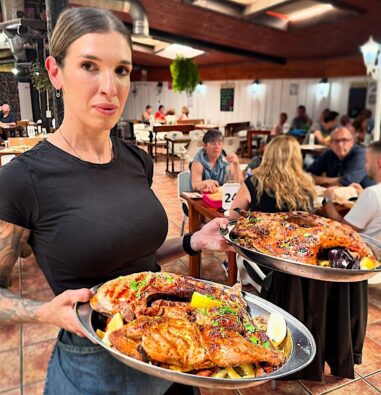
The fact that haute cuisine is evolving may be one indicator. More important, or more telling, however, is that the renaissance of Canary Islands cuisine is coming from the grassroots. It is driven by passionate chefs and by diners who want to taste not just what is typically eaten around the Mediterranean, but also what can be created from traditional home recipes.
«The coast and the interior of the Canary Islands belong to different culinary worlds,» explains Ángel Domínguez of the traditional restaurant Sabor Canario in La Orotava. That means meat here, fish there. In his view, the Canarian culinary universe revolves around two fixed stars. One of these is the Papas – potatoes. The Canarian varieties are still the closest to those original potatoes brought back from Latin America by the Spanish conquistadors in the 16th century. And what, then, is the other fixed star? Gofio, the Canary Islands‘ natural instant food.
You can now find delicious recipes from Canary Islands cuisine here on our website.



«Canary Islands cuisine - traditional and delicious - all the information and recipes»
No comments on this article yet.